


 English - EN
  繁體 - ZH-TW
  简体 - ZH-CN
  Español - ES
  日本語 - JA
  العربية - AR
  Русский - RU
  Français - FR
PRM Insights: Why an All-Electric Injection Molding Machine is a Financial Strategy, Not Just an Equipment Upgrade
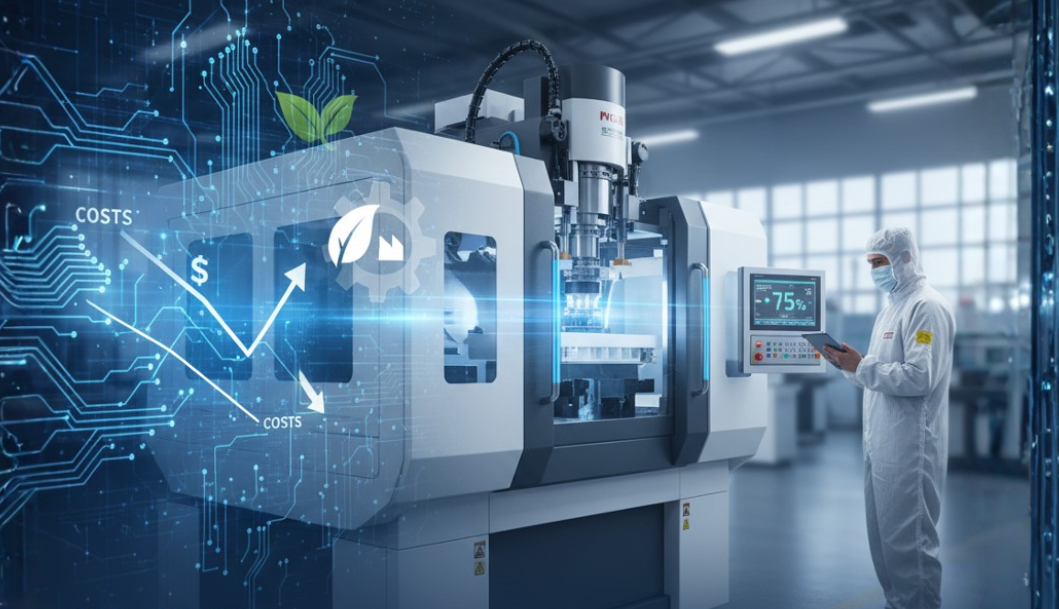
With production costs soaring, the battle for profit is won by controlling your largest hidden expense: energy.
With volatile raw material prices squeezing your margins, are you struggling with cost control?
While we can't control global commodity prices, many factory owners overlook one of the largest and most controllable costs in their plant: energy consumption.
Is your traditional injection molding machine running—and draining power—even when it's idle?
Hydraulic vs. All-Electric: More Than Tech, It's a Cash Flow Difference
Do you know? That most of the traditional hydraulic (or hybrid) machines must keep their motors running to maintain pressure, even during the cooling or holding phases. This creates a hidden energy drain. A black hole you may have overlooked.
All-Electric Injection Molding Machines (IMMs) are fundamentally different.
They are driven by independent, high-performance servo motors for each action (injection, plasticizing, clamping, ejection). Power is consumed only when an action is performed.
This delivers more than just energy savings; it provides a total operational revolution.
1. Staggering Energy Savings
- The Data: Extensive industry benchmarks confirm that all-electric IMMs can consume 50% to 80% less energy than their hydraulic counterparts. For a high-utilization factory, the money saved on electricity can often pay back the equipment cost in just 2-3 years, directly boosting your net profit.
2. Ultimate Production Precision
- Precise Control: The response and accuracy of servo motors (down to 0.01mm) are far superior to hydraulic systems.
- The B2B Value: This translates to a lower scrap rate. When raw materials are expensive, wasting 1% less material equals earning 1% more profit. This is critical for high-precision sectors like medical devices or electronics.
3. Superior Total Cost of Ownership
- Goodbye, Hydraulic Oil: No more leaks, oil contamination, high maintenance costs, or sticky greasy hands. This also reduces cooling water consumption.
- Cleanroom Ready: The clean, quiet operation makes it the standard for medical and food-grade packaging, helping you compete for higher-value contracts.
| Feature | Traditional Hydraulic | All-Electric |
|---|---|---|
| Energy Use | ⚡️⚡️⚡️ (High) - Motor runs continuously | ⚡️ (Low) - Power used only on action |
| Precision | Good (±0.1mm) | ???? Ultimate (±0.01mm) |
| Scrap Rate | Standard | Lower (Less material waste) |
| Maintenance | High (Oil leaks, filtering, cooling) | Minimal (No hydraulic oil) |
| Operation | Noisy, potential contamination | Clean & Quiet (Cleanroom Ready) |
| Best For | General, large parts | High precision, medical, electronics |
| TCO | Higher long-term running costs | Lower Total Cost of Ownership |
The Money Saving Move
We are seeing a global shift in plastics manufacturing. Purchasing decisions are moving beyond "equipment price" and toward "Total Cost of Ownership" and "Return on Investment."
Integrating all-electric IMMs into your production line isn't just about ESG compliance; it's your most powerful weapon to fight rising material costs with smart energy efficiency.
Your Next Step
Is your factory ready for this energy-saving revolution?
The PRM-Taiwan platform connects you with the top-tier machinery suppliers, many of whom are masters of mature, all-electric technology.
Recommended Next Steps for Buyers
- Technology Deep Dive: Top 10 Injection Molding Machine Manufacturers for 2025
- Supplier Case Study: From Cup to Car Parts: CLF’s TWII-250 Shows How You Can See It All in One Shot
- Application Focus: The Role of Injection Molding in Dumbbell Manufacturing

COOPERATIVE PARTNER