

 English - EN
  繁體 - ZH-TW
  简体 - ZH-CN
  Español - ES
  日本語 - JA
  العربية - AR
  Русский - RU
  Français - FR
Top 10 Injection Molding Machine Manufacturers for 2025
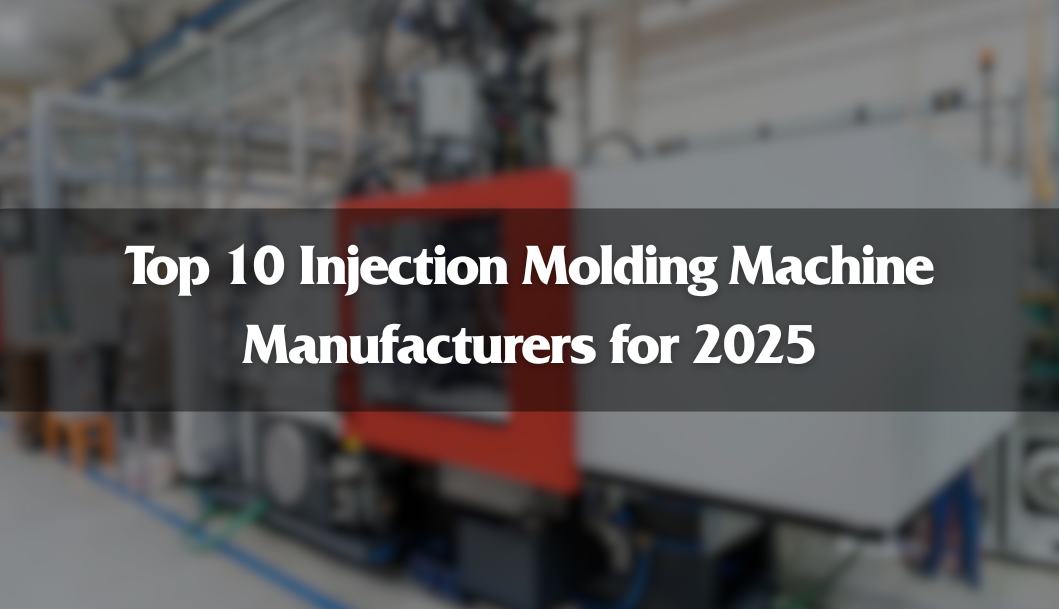
The injection molding machine is a foundational pillar of modern manufacturing, essential for the mass production of plastic parts that permeate every aspect of daily life. From complex automotive components to precision medical devices, the plastic injection molding process enables the creation of intricate designs with high repeatability and cost-effectiveness. The selection of a suitable injection molding machine and a reliable manufacturing partner is therefore a critical strategic decision, profoundly impacting production capacity, part quality, and overall business profitability.
This comprehensive guide serves as an authoritative resource for industry professionals. It begins by explaining the fundamental principles of the injection molding process, its core components, and the primary machine types. It then establishes key criteria for evaluation before presenting 10 of the most prominent injection molding machine manufacturers leading the market into 2025, reflecting the industry's dynamic and innovative landscape.
What is Plastic Injection Molding?
The Process Explained
Plastic injection molding is a manufacturing process for producing parts by injecting molten material into a mold. It is a cyclical process, with each cycle comprising several stages:
- Clamping: The two halves of the mold are securely closed by the clamping unit.
- Injection: Plastic pellets are melted in the injection barrel and then forcibly injected into the closed mold cavity under high pressure.
- Dwelling & Holding: After the cavity is filled, pressure is maintained for a set period to ensure all parts of the mold are filled and to compensate for material shrinkage.
- Cooling: The molten plastic inside the mold cools and solidifies, taking the shape of the cavity.
- Mold Opening: The clamping unit opens the mold halves.
- Ejection: The solidified part is pushed out of the mold cavity by an ejection mechanism. The cycle can then begin again.
Key Advantages
The widespread adoption of injection molding is due to its significant advantages:
- High Production Efficiency: Rapid cycle times allow for high-volume production, making it ideal for mass manufacturing.
- Complex Part Geometry: The process can produce highly intricate and complex parts with a high degree of precision.
- Material Versatility: A vast range of thermoplastic and thermoset polymers can be used, each offering different mechanical and chemical properties.
- Low Cost Per Part: While initial tooling costs can be high, the cost per part is extremely low in high-volume runs.
- High Repeatability: The process is highly repeatable, ensuring consistency from the first part to the millionth.
The Core Components of an Injection Molding Machine
An injection molding machine is comprised of three main units working in concert.
The Injection Unit This unit is responsible for melting and injecting the plastic material. Its key components are:
- Hopper: A large container that holds the raw plastic pellets and feeds them into the barrel.
- Barrel: A heated cylindrical chamber where the plastic is melted.
- Screw: A reciprocating screw located inside the barrel that conveys, melts, and pressurizes the plastic.
- Nozzle: The exit point of the barrel that mates with the mold to inject the molten plastic.
The Clamping Unit This unit holds the mold together during injection and cooling and opens it for part ejection. Its key components are:
- Platens: Two large plates, one stationary and one movable, to which the mold halves are attached.
- Tie Bars: Four heavy-duty steel rods that provide structural support and guide the moving platen.
- Mold: The custom tooling that contains the cavity in the shape of the desired part.
The Control Unit Often referred to as the machine's "brain," this is a sophisticated computer system (PLC or industrial PC) that controls and monitors all machine parameters, including pressure, temperature, speed, and timing, ensuring precise and repeatable operation.
Types of Injection Molding Machines
Machines are primarily categorized by their drive system.
Hydraulic Injection Molding Machines Powered by a hydraulic pump, these machines are known for their high clamping force capabilities and robust, durable design. They are exceptionally well-suited for producing large, thick-walled parts. While traditionally offering a lower initial investment, they typically have higher energy consumption and lower precision compared to electric models.
All-Electric Injection Molding Machines These machines use high-precision electric servo motors to drive all movements. This results in outstanding energy efficiency (often 50-70% less than hydraulic equivalents), superior precision and repeatability, quieter operation, and cleaner performance, making them ideal for the medical device and electronics industries.
Hybrid Injection Molding Machines Hybrid machines combine the strengths of both technologies. They typically use an electric drive for the injection process to achieve precision and speed, while employing a hydraulic system for the powerful clamping force required. This offers a balanced solution for performance and energy consumption.
Key Criteria for Evaluating Injection Molding Machines
A comprehensive evaluation involves assessing several key technical specifications.
- Clamping Force (Tonnage) and Drive System: The required clamping force is a primary specification. The choice of drive system (hydraulic, all-electric, or hybrid) should align with the application's need for power, precision, and energy efficiency.
- Screw and Barrel Specifications: The plasticizing unit must be optimized for the specific materials being processed to ensure a homogeneous melt and prevent material degradation.
- Control System and Connectivity: A modern control system is essential for process stability. Its ability to connect with auxiliary systems for data exchange is critical for implementing smart manufacturing (Industry 4.0).
- Customization and Modularity: The manufacturer's ability to modify standard designs or offer modular configurations allows for greater operational flexibility and optimization for specific tasks.
- After-Sales Service and Technical Support: The quality and reach of a manufacturer's service network is crucial for maximizing machine uptime and ensuring long-term operational success.
Top 10 Injection Molding Machine Manufacturers for 2025
This list highlights 10 key manufacturers, each a leader in their respective domain, representing the pinnacle of the global injection molding industry.
1. ARBURG (Germany) Headquartered in Germany, Arburg is a world-leading manufacturer renowned for its technological innovation and high-quality "Allrounder" modular machines. The company is a significant proponent of Industry 4.0 and digital manufacturing solutions. Arburg's product portfolio is extensive, covering a wide range of applications from micro-molding to their Freeformer technology for industrial additive manufacturing, positioning them as a benchmark for precision and versatility.

2. TAIWAN KINKI (Taiwan) Taiwan Kinki Machinery has established a strong market position by specializing in thermoset and vertical injection molding machines. The company provides robust solutions for processing materials such as Bakelite, BMC, and epoxy, which are critical for electrical and heat-resistant applications. Their vertical machines are optimized for insert molding processes common in the electronics and automotive component sectors.
3. ENGEL (Austria) ENGEL is an Austrian-based global leader in plastics processing machinery, recognized for its pioneering role in integrated system solutions. The company is celebrated for its innovative tie-bar-less machine design, which allows for larger molds and easier automation, as well as its deep expertise in lightweight composites and advanced process technologies. ENGEL's focus on complete solutions, from machine to automation and digitalization, makes them a key partner in smart factory implementation.
4. CHUAN LIH FA (CLF) (Taiwan) CLF is a prominent Taiwanese manufacturer specializing in large and very large tonnage injection molding machines, with clamping forces extending up to 4,000 tons. Their expertise lies in developing durable and powerful two-platen and toggle systems for the production of large-scale items, such as automotive bumpers and dashboards, transportation pallets, and large containers.

5. KraussMaffei (Germany) KraussMaffei is a German technology giant offering comprehensive system and process solutions for injection molding, extrusion, and reaction process machinery. The company has a strong foothold in the automotive sector, providing high-performance machines for large-part manufacturing. Their broad technology portfolio and expertise in data-driven production make them a powerful force in the global market.
6. FU CHUN SHIN (FCS) (Taiwan) Established in 1974, Fu Chun Shin is a leading Taiwanese manufacturer with a global reputation for its advanced multi-component (co-injection) molding technology. FCS is a specialist in two-component (2K) and multi-color machines, providing sophisticated turnkey solutions for the automotive, consumer electronics, and medical industries where complex, multi-material parts are standard.

7. VICTOR TAICHUNG (Taiwan) As one of Taiwan's most established machinery manufacturers, Victor Taichung is widely recognized for producing machines with exceptional rigidity, durability, and reliability. The company's emphasis on high-quality engineering and robust construction has made its machines a staple in facilities that prioritize long-term performance and a low total cost of ownership across general-purpose molding applications.
8. Husky (Canada) Husky Injection Molding Systems is a Canadian-based global leader, particularly dominant in specific high-volume markets. The company is the undisputed top supplier of systems for PET preform manufacturing and is a major force in high-performance packaging and medical molding. Their focus on fully integrated, high-output turnkey systems has made them an essential supplier for the world's largest consumer goods companies.

9. HUARONG (Taiwan) Huarong Plastic Machinery is a key Taiwanese manufacturer with a strong focus on energy efficiency and smart manufacturing. The company has developed highly efficient servo-hydraulic systems and a range of all-electric machines designed to reduce operational costs. Huarong is also active in integrating Industry 4.0-compliant solutions into their platforms.
10. Haitian International (China) As the world's largest producer of injection molding machines by unit volume, Haitian International holds a commanding position in the global market. The company's strategy focuses on providing highly efficient, standardized machines that offer an exceptional balance of performance and cost-effectiveness. Their success is built on making advanced technology accessible to a broad range of customers worldwide.

Conclusion
The global market for injection molding machinery is characterized by a diverse range of manufacturers, each possessing distinct technological strengths. Making an informed procurement decision requires a methodical approach: first, understanding the fundamentals of the process and the machinery; second, applying rigorous evaluation criteria to specific production needs; and third, researching the capabilities of leading manufacturers. The companies presented in this guide represent a significant cross-section of the industry's capabilities, from global technology leaders to highly-focused specialists, underscoring the dynamic and competitive nature of the sector heading into 2025.
We have over 200 of the biggest and many of the smallest Taiwanese machinery manufacturers on our site and contacts with many more. Whether you are looking for full lines such as, recycling machines extruders, blow molding machines, injection molding machines and printing machines, or auxiliary equipment and parts such as gearboxes, barrels, screws, molds, dies, control systems and virtually anything related to the plastic and rubber industries including packaging. If it’s made in Taiwan, we will find it for you!