


 English - EN
  繁體 - ZH-TW
  简体 - ZH-CN
  Español - ES
  日本語 - JA
  العربية - AR
  Русский - RU
  Français - FR
A Brand-New Venue, and a Market That's Still Growing Into It: Field Notes from the 14th Hanoi Plastics & Rubber Show
Walking into the newly opened Vietnam Exposition Center (VEC) for the first time, my immediate impression was that the venue is almost too beautiful for where this market currently stands. The rooflines are striking, the halls are vast — and even though only two halls were in use this time, exhibitors on site told me that these two halls alone offer roughly 50% more floor space than the entire old venue.
Then you step outside, and there isn't a single restaurant within walking distance.
Those two images, side by side, capture everything I saw at the 14th Hanoi International Plastics & Rubber Industry Exhibition — and everything you need to know about the northern Vietnamese market right now: it hasn't fully taken shape yet, but it is growing fast.
Circular Looms Everywhere; the Injection Molding Story Is in the Details
The exhibits that made me stop and take note were three circular looms — one from India's Lohia, a major player in the segment, and two more (one small, one mid-sized) from Chinese manufacturers. Three machines of the same type appearing at a single show is not a coincidence. It's a demand signal: Vietnam's woven sack and packaging materials industry is running hot.
On the injection molding side, five exhibitors brought live machines to the floor — four Chinese manufacturers, plus Hong Kong's long-established Chen Hsong. Chen Hsong deserves a special mention: this was the first time they've ever shipped a machine to the Hanoi show, and the reason is simple — the old venue was too small to accommodate large-tonnage equipment. The new venue changes that, and machinery builders who need floor space to demonstrate real iron are the first direct beneficiaries. For every machinery maker still on the fence, the message is now unambiguous: Hanoi can finally host your full-size equipment.
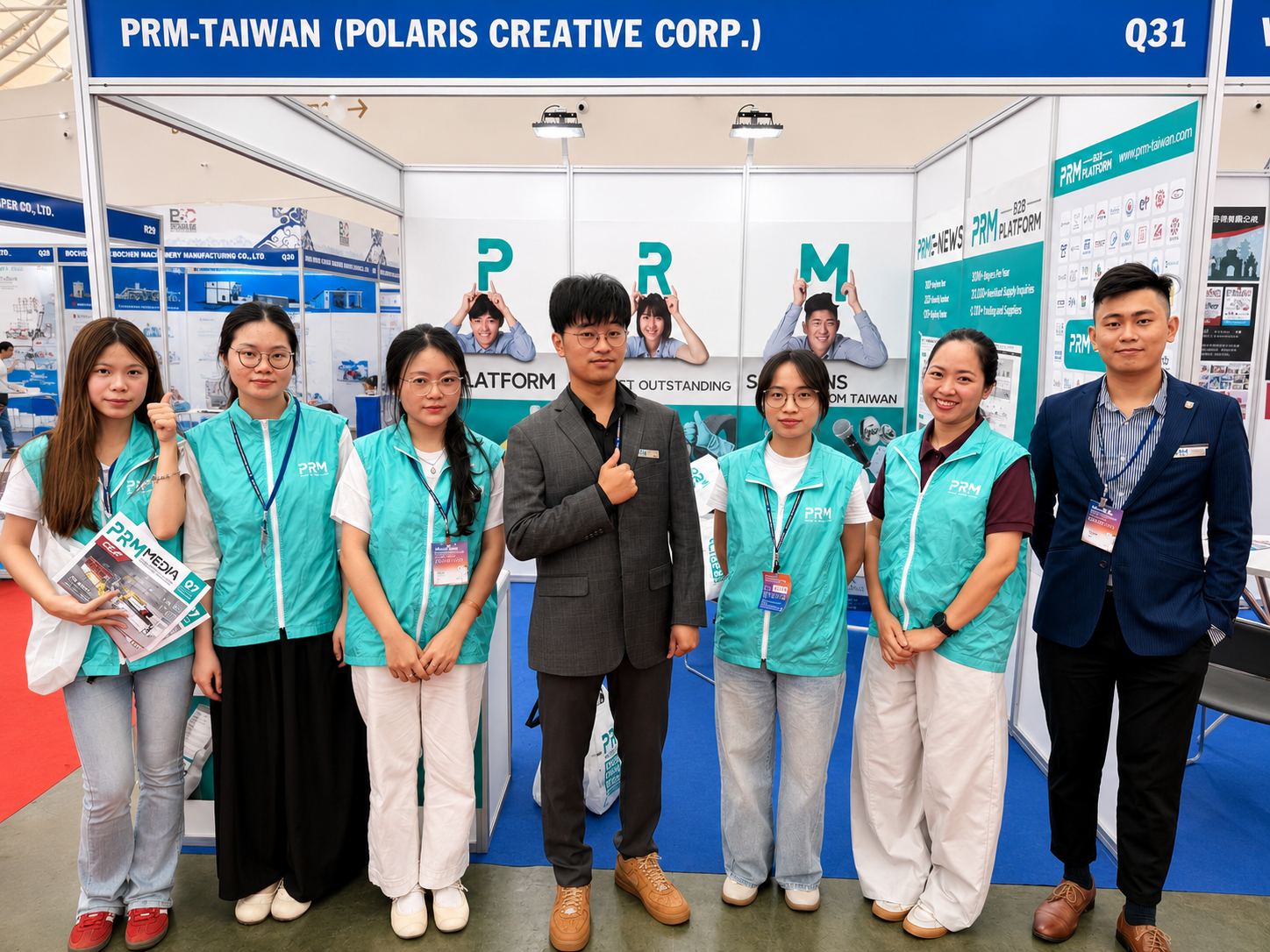
Interestingly, no Taiwanese exhibitor shipped an injection molding machine this time — yet Taiwanese injection molding brands were far from absent. CLF (Chuan Lih Fa) took the cover of this edition of the PRM Media show daily, choosing media visibility over machine freight. The machine didn't make the trip, but the brand did: every buyer who picked up the show daily at the entrance saw CLF's TPII two-platen injection molding machine first.
Same market, two playbooks. One company ships a machine across the ocean for a head-on demonstration; another uses media placement to reach buyers with precision. Exhibiting was never an either/or decision — how you combine your channels of visibility is the real strategic question.
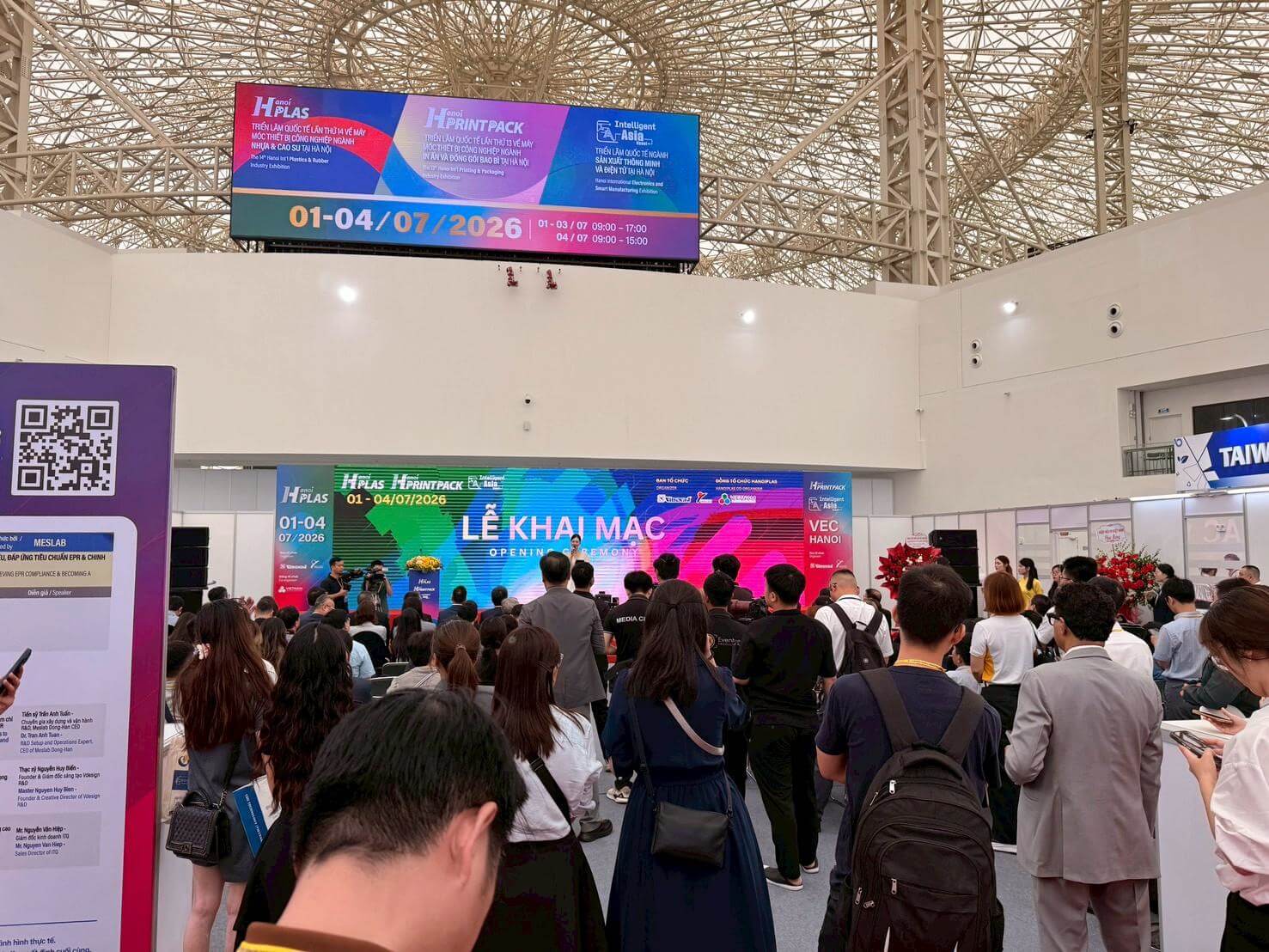
Opening ceremony of the 14th Vietnam Hanoi International Plastics and Rubber Industry Exhibition (HanoiPlas 2026)
Bringing the Right Machine Beats Bringing a Great Machine
If there's one takeaway I'd share with Taiwanese machinery makers, it's this. How good your equipment is, is one question. Whether you've brought it to the right market, matched against demand that's actually rising there, is another question entirely. The same top-spec machine will generate wildly different levels of inquiry depending on whether it lands in a saturated segment or an emerging gap. Reading what a market currently lacks matters more than proving how good you are.
What's Really Taking Shape: Automation and Inspection
If the machinery on display tells you what Vietnam is making today, the automation and inspection equipment tells you where it wants to go next. This edition featured a notable number of automation and inspection suppliers — hardware and software alike — and many of them are targeting applications well beyond semiconductors, extending into general machinery and production lines of all kinds.
That signal matters more than any single machine category. When a market starts demanding inspection and automation integration, it means the market no longer just wants to make things — it wants to make them consistently, precisely, and efficiently. That is the watershed moment when a manufacturing base shifts from quantity to quality, and it's precisely the segment where Taiwan's supply chain has the strongest opening.
A Sizable Taiwanese Contingent — With a Cautious Outlook
The Taiwanese presence was substantial: close to 70 Taiwanese companies exhibited. Those who brought physical machinery included HCI (華周), Venus Plastic (金弘興), Shini (信易), Panstone (磐石), Chao Wei(僑偉), and NEW DONG HO (新東和). Many longtime PRM friends were also on site — Long New (久馨), Cosmo (旺全), Jin Chang (金昌), Ding Ji Polymer (頂級複合材料), Chen Way (進韋), and Pai Tech (奇鋒).
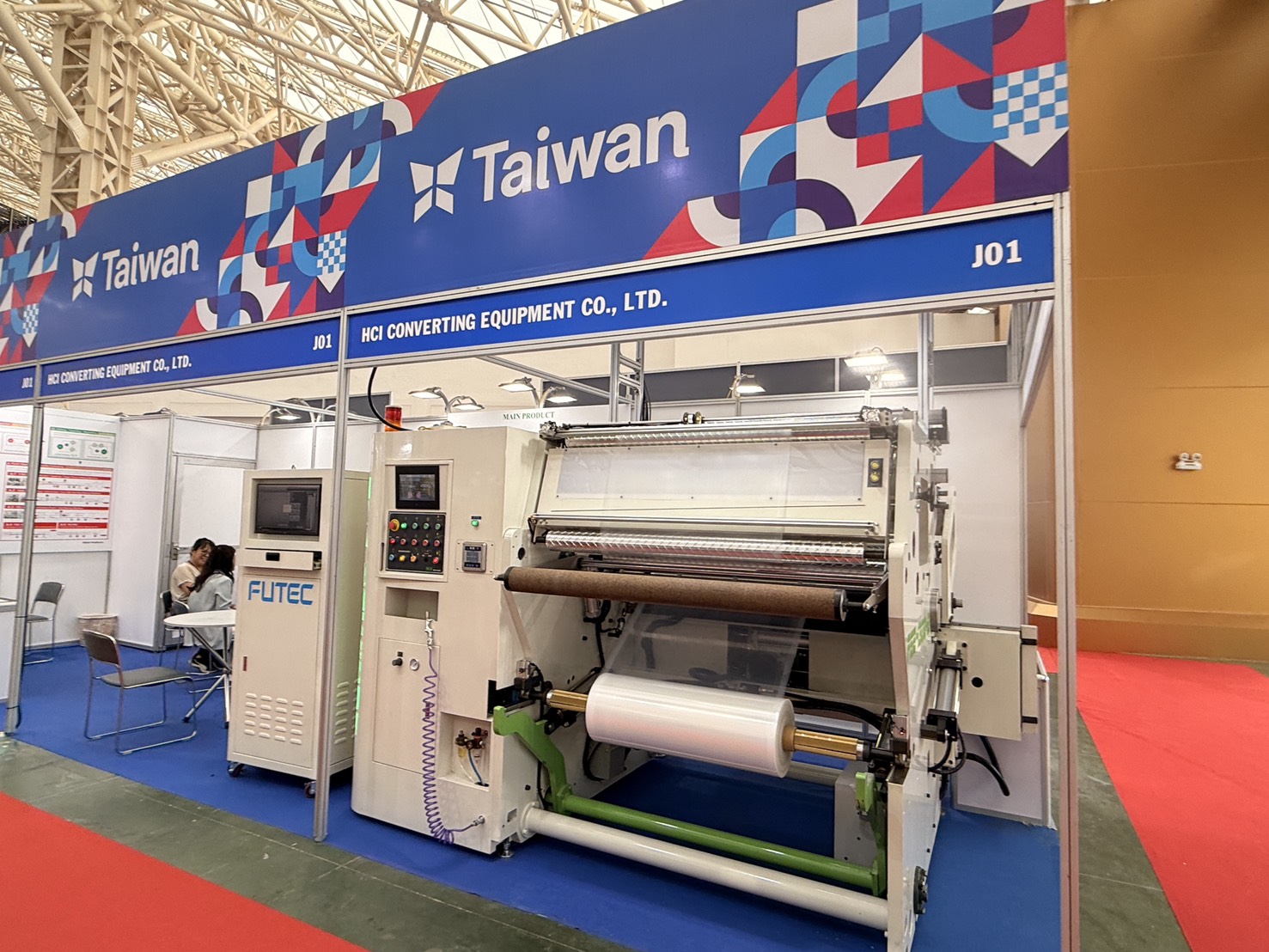
Taiwanese equipment brand HCI has entered the Vietnamese market, showcasing its precision machining equipment at the exhibition and demonstrating Taiwan's strength in machinery manufacturing, actively seeking to meet the needs of industrial upgrading in Southeast Asia.
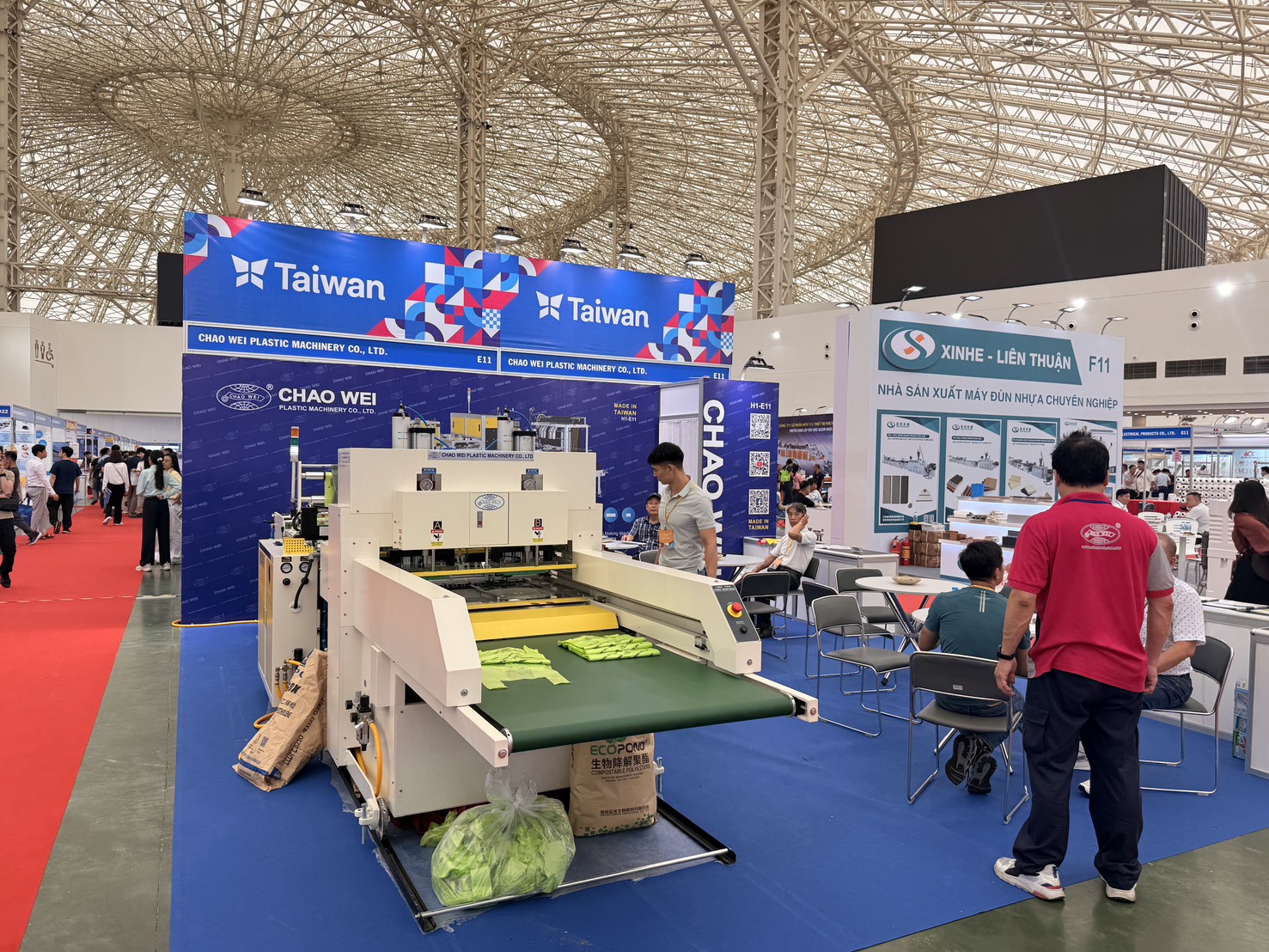
Chao Wei showcased its high-efficiency processing equipment at the Hanoi exhibition, leveraging PRM overseas market promotion resources to enhance brand exposure, deepen communication with international buyers, and expand business opportunities in the Southeast Asian market.
Walking the floor and talking with exhibitors, the most consistent sentiment was caution heading into 2026. Many reported weak demand and a tough year, with marketing budgets tightening in response. Several had just returned from other overseas shows and described both foot traffic and deal flow as merely "okay." The difficulty of converting show-floor traffic into lasting relationships was a shared frustration among several company owners.
Yet within that same group, a clear divergence is emerging. Some exhibitors are already using AI tools proactively and asked detailed, genuinely curious questions about digital applications. Others remain stuck at "marketing doesn't work" and "the boss won't release budget" — some haven't refreshed their ad materials in years. Facing the same headwinds, some companies are opening new roads while others are pulling back. To a large degree, that fork in the road will determine who makes it through this cycle.
Another striking pattern: a significant share of exhibitors were either first-timers in Hanoi or returning after a long absence. The key driver is that Taiwan's international trade subsidies this year are more generous than ever. Among the exhibitors I spoke with, a surprising number were exhibiting abroad for the very first time — carried into this new market on the momentum of the subsidy wave.
As for local Vietnamese exhibitors, there were more than I expected, though still scattered across the halls rather than clustered into any critical mass — itself further evidence of a market in its early innings.
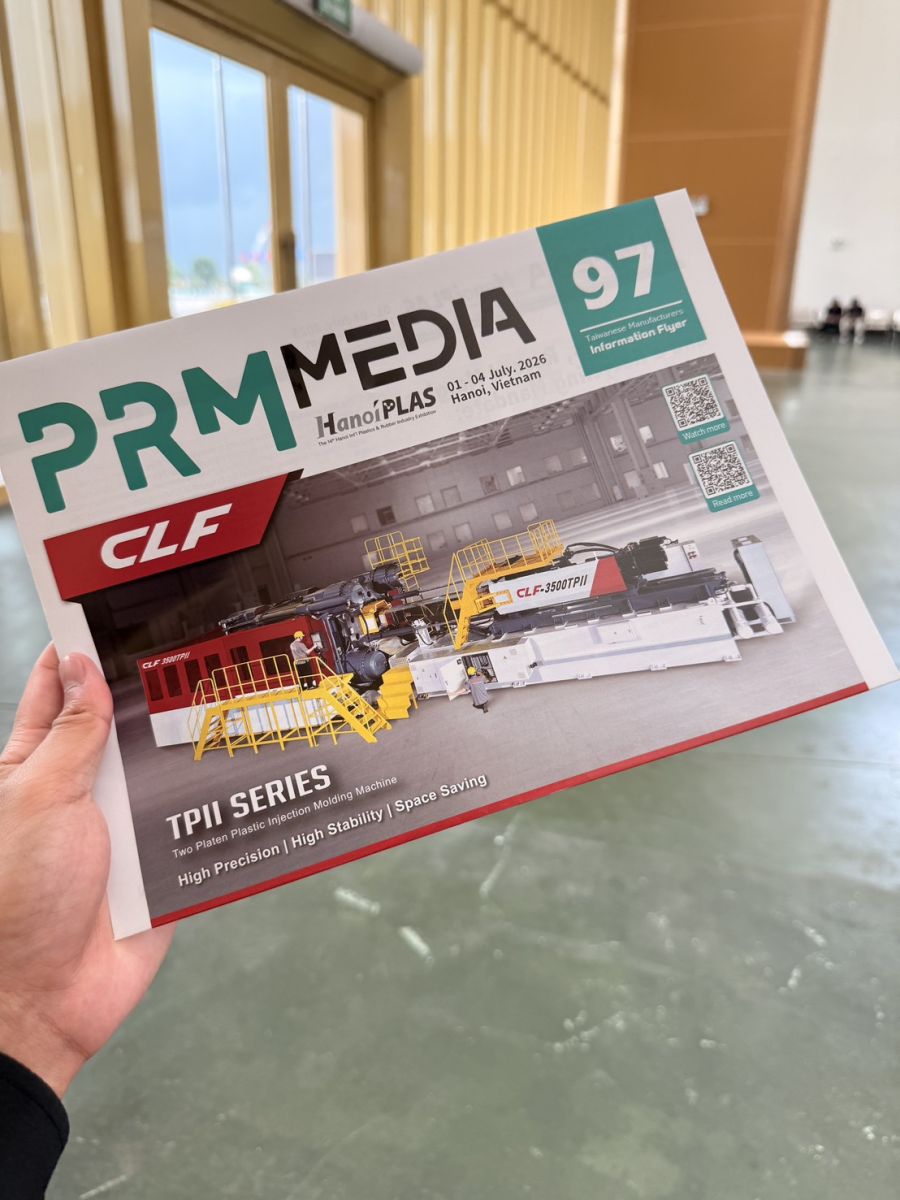
The exhibition was not just about on-site participation. Through the PRM O2O exhibition exposure strategy, CLF successfully reached buyers' needs and seized potential business opportunities even though it did not participate in the exhibition.
The Buyers Are Real. The Bet Is on the Future.
Buyer attendance didn't match the Ho Chi Minh City edition, but for a Hanoi show it reached the level it should, and booth interactions were far from cold. Printing was the one noticeable gap: the show had a dedicated printing zone and two printing-related conference sessions, yet only a handful of printing equipment makers actually exhibited — a mismatch between the show's thematic planning and its actual exhibitor mix.
The honest part of this report concerns the surroundings. There are currently no restaurants near the venue, the supporting infrastructure is still under construction, and most exhibitors stayed in West Lake or the Old Quarter — convenient for daily life, at the cost of a 30–40 minute commute each morning.
But flip that around, and everything that "isn't there yet" is exactly where the upside lives. A gorgeous new venue, undeveloped surroundings, first-time exhibitors, buyers just beginning to show up, subsidies still ramping — every signal points the same direction: those entering now are staking early positions in a market that hasn't taken shape yet. Those who wait until it matures will arrive years behind.
Early Positioning Shouldn't Mean Flying Blind
Here's the catch: exhibiting overseas is expensive. Booth fees, ocean freight for machinery, staffing, accommodation — none of it is cheap, and in a cautious market every marketing dollar has to earn its keep. How do you know the spend was worth it? Which countries' buyers are genuinely interested in your equipment? Which models are they looking at, and for how long?
Rather than deciding on gut feel, you can use data to take the risk out of the decision — and that's exactly what PRM does. We build a dedicated online showroom for your machinery and pair it with GA4 tracking: which countries view your equipment most, which models get the most attention, how long visitors stay — all of it quantified. The physical show gets you in front of people; digital marketing lets you see them clearly. Running both together is what a modern export strategy looks like.
Smarter decisions on a leaner budget. If you're thinking about riding this wave overseas but aren't sure which show to attend or which machines to bring — come talk to us.
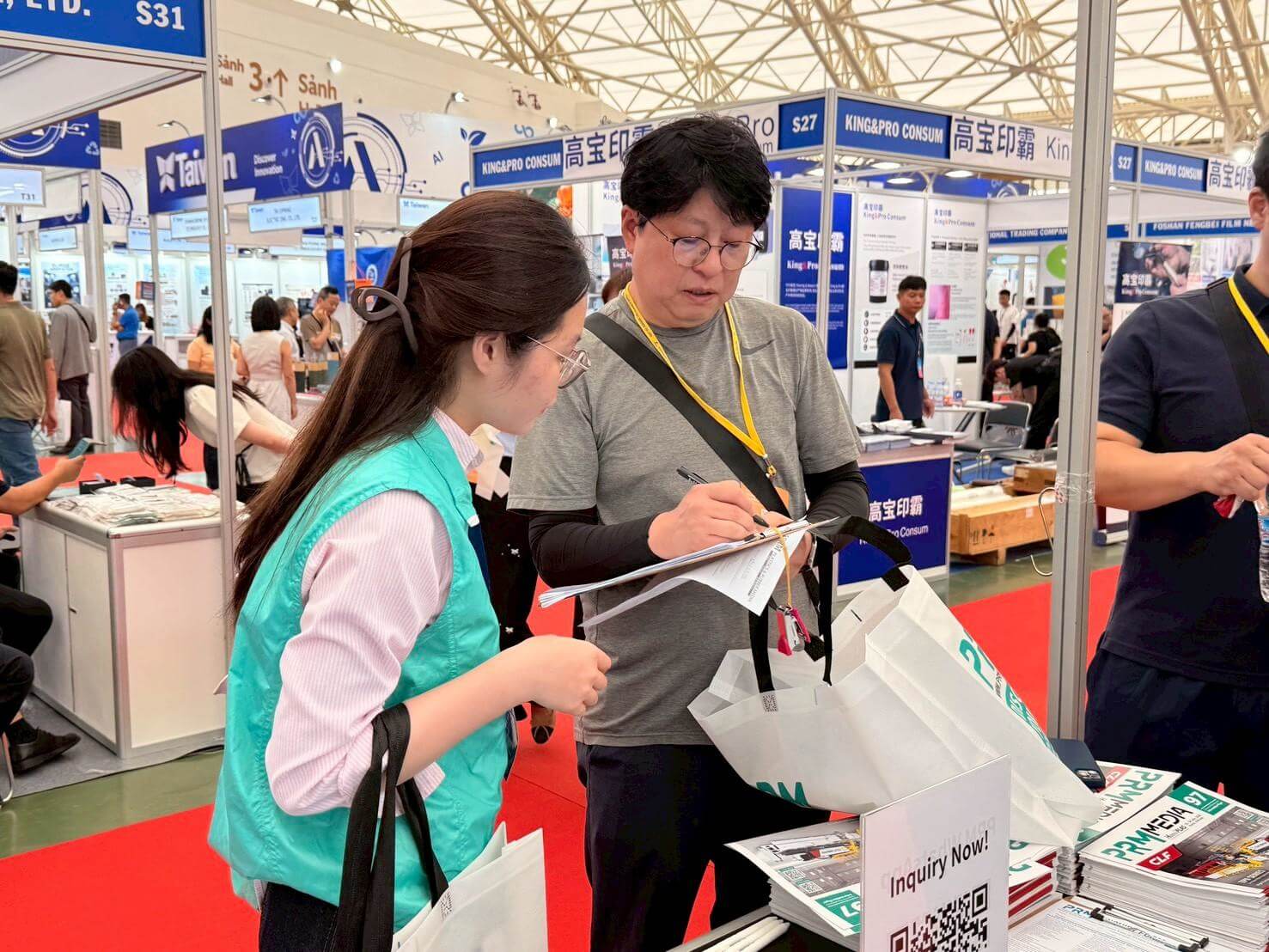
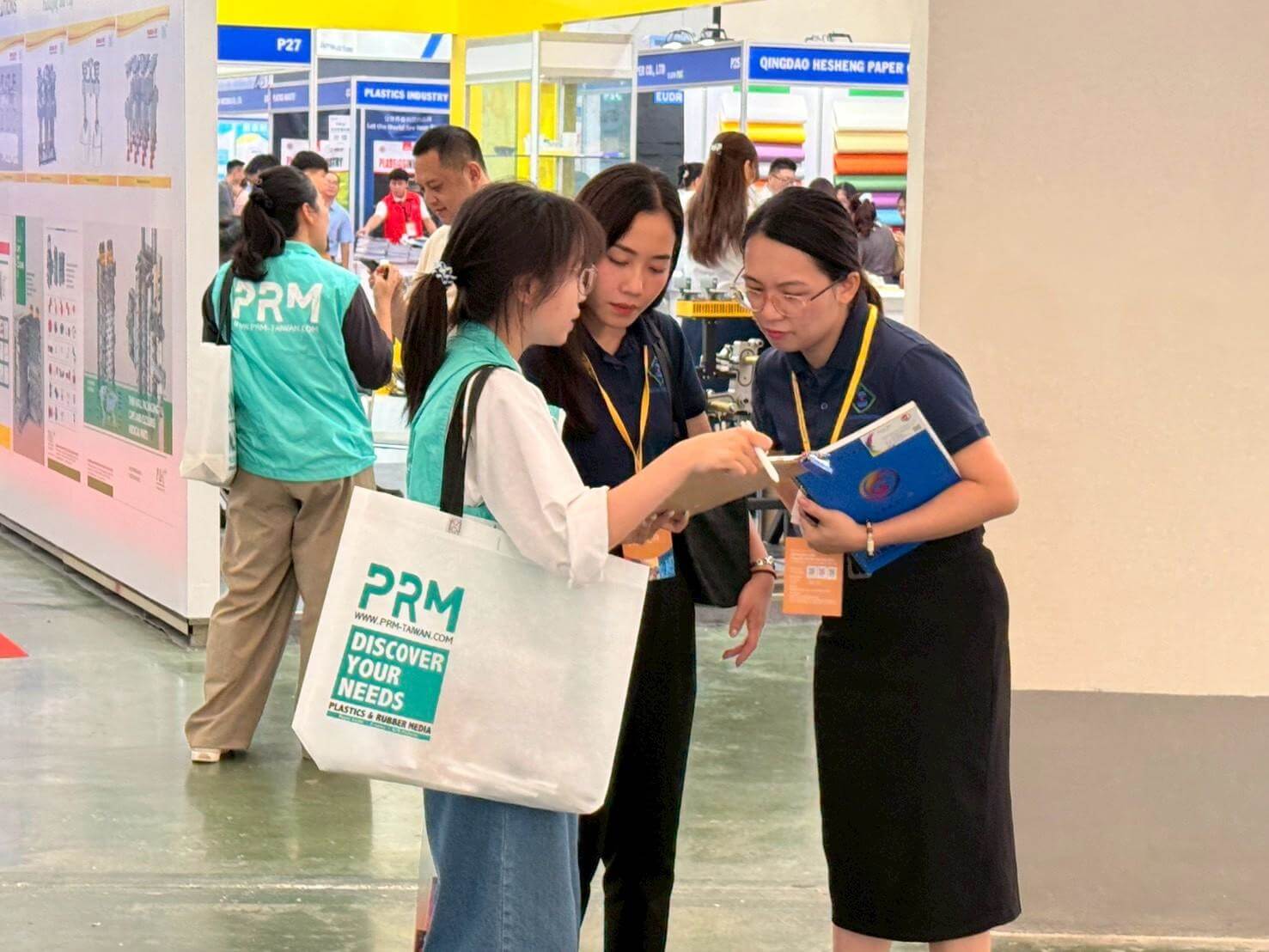
By observing buyer feedback at exhibitions, PRM grasps demand trends and assists B2B plastics and rubber machinery manufacturers in accurately adjusting their market strategies.


COOPERATIVE PARTNER