

 English - EN
  繁體 - ZH-TW
  简体 - ZH-CN
  Español - ES
  日本語 - JA
  العربية - AR
  Русский - RU
  Français - FR
Top 10 Plastic Recycling Machine Manufacturers for 2026
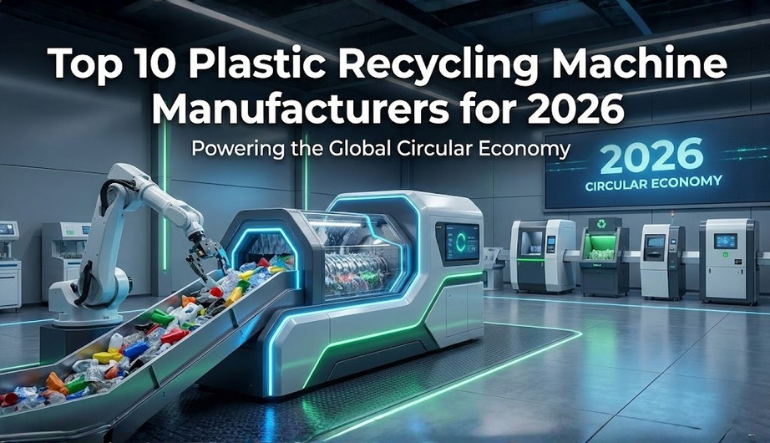
Quick Answer: The right plastic recycling machine manufacturer depends on your waste stream. Clean factory film and raffia scrap usually goes to a cutter-compactor (3-in-1) pelletizing line; printed or contaminated film needs stronger degassing and melt filtration, plus washing when it is dirty; PET bottles call for a dedicated bottle washing and rPET line; bulky waste starts with a shredder. This guide compares ten plastic recycling machine manufacturers from Taiwan, Europe and China by the recycling stage they cover, with a direct inquiry route to each.
Recycled plastic has moved from a cost-saving option to a specification. Brand owners write recycled content into purchase orders, packaging rules set minimum levels, and many converters now treat their own scrap as a raw material rather than waste. That makes a recycling line a strategic purchase: it decides which waste you can accept, what pellet quality you can sell or reuse, and how much downtime you lose to contamination.
The catch is that "recycling machine" covers several different machines, so this guide maps each recycling stage to its equipment before comparing manufacturers.
What Is a Plastic Recycling Machine?
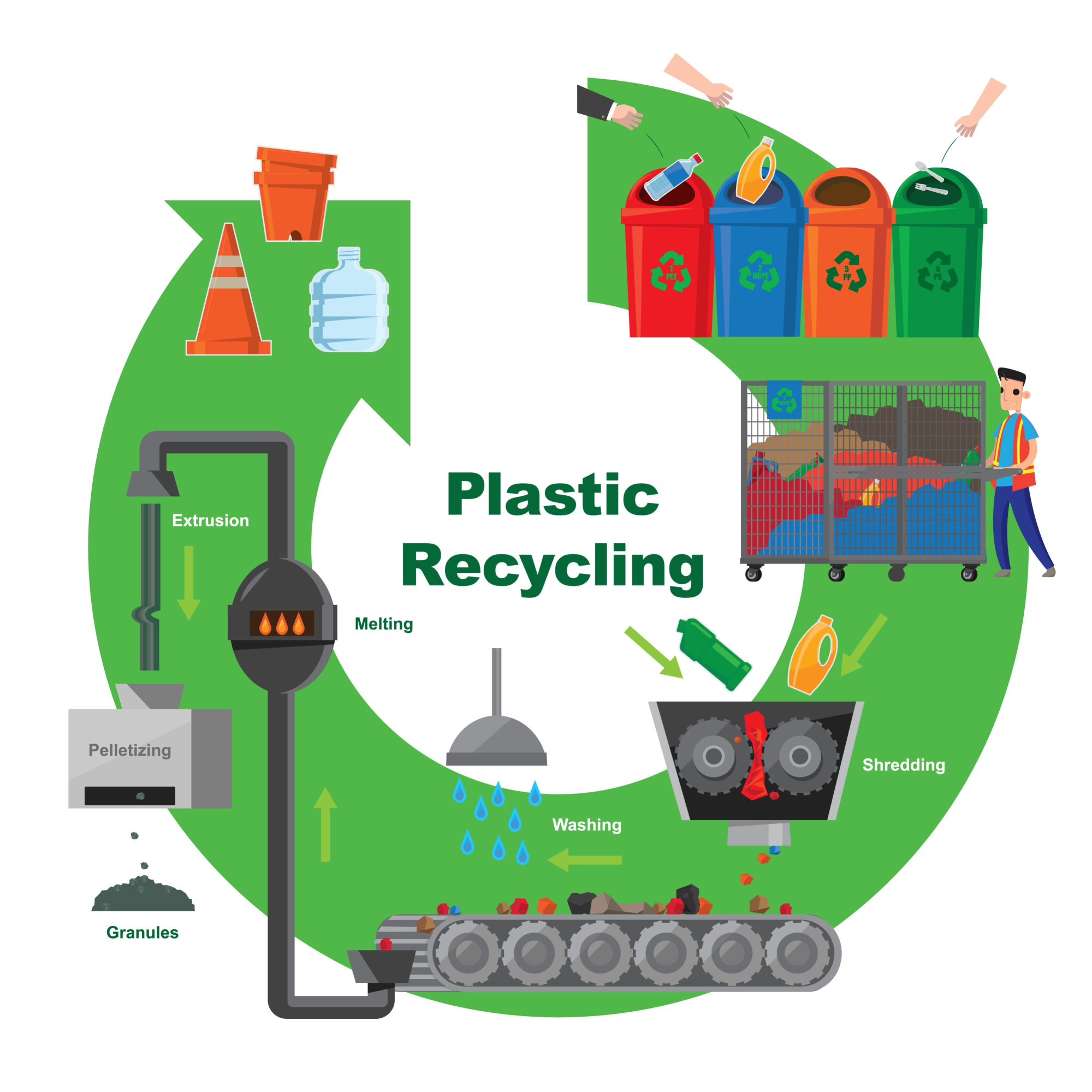
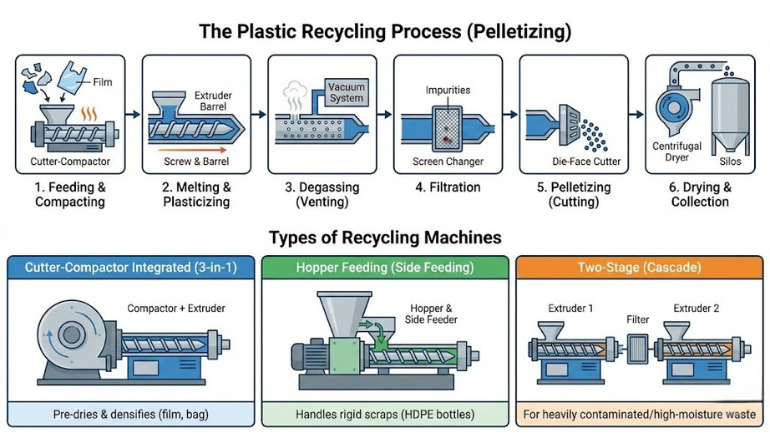
A plastic recycling machine is equipment that turns plastic waste back into a usable raw material, most often uniform pellets that can be fed into extrusion, film blowing or molding again. A complete recycling line typically chains several steps: size reduction (shredding or granulating), washing and drying for dirty material, then melting, degassing, melt filtration and pelletizing in an extruder.
Types of Plastic Recycling Machines
Shredders and granulators. Single-shaft and twin-shaft shredders break down bulky items, bales, pipes and lumps; granulators cut the result into flakes. They provide size reduction for buyers producing regrind or feeding downstream equipment.
Washing lines. Pre-washers, friction washers, sink-float tanks and dryers clean post-consumer film, rigid plastics or PET bottles before extrusion. Contamination level decides how many washing steps you need.
Pelletizing lines. An extruder melts the material, removes moisture and ink gases through vacuum venting, filters out solid contaminants and cuts the melt into pellets. Cutter-compactor (3-in-1) machines combine shredding, extrusion and pelletizing for light film scrap; two-stage machines add a second extruder for extra degassing and filtration on printed or contaminated material.
Melt filters and screen changers. Automatic, self-cleaning melt filters remove solid contaminants from the melt, which matters most on post-consumer waste.
For a deeper walk-through of each machine type, see our guide to essential types of plastic recycling machines.
How to Choose a Plastic Recycling Machine Manufacturer
- Start from your waste, not the brochure. Material (PE, PP, PET, PS), form (film, raffia, rigid regrind, bottles, foam), print coverage, moisture and contamination decide the configuration. Send real samples and ask for a trial run on them before comparing quotes.
- Decide which recycling stages you are buying. Some manufacturers supply only shredders, others only pelletizing lines or filters, and a few plan the whole recycling plant. If you buy stages from different suppliers, agree in writing who is responsible for overall output and pellet quality.
- Ask how degassing and melt filtration are handled. Printed and wet material releases gas and carries solids. Ask which venting design and which filter type the proposed line uses, and how often screens must be changed on your material.
- Compare energy on the same basis. Ask each supplier for specific energy consumption (kWh per kg of output) measured on comparable material, then model it at your local power price and running hours.
- Check spare parts and wear-part supply. Recycling is abrasive. Ask for the price and lead time of screws, barrels, blades and screens, and where the nearest stock and service engineers are.
The 2026 Advantage: What to Plan For
- Recycled content is becoming a legal requirement. In the EU, the Single-Use Plastics Directive already requires PET beverage bottles to contain recycled plastic, and the Packaging and Packaging Waste Regulation (PPWR) introduces minimum recycled-content requirements for plastic packaging from 2030.
- Post-consumer film is the hard part. Printed, wet and mixed film is where washing, degassing and filtration choices decide whether a line runs stably.
How We Picked This List
- Each manufacturer has documented recycling equipment and applications. Taiwanese and member entries were checked against each company's profile and product listings on PRM-Taiwan and its official materials; international brands were checked against their official sites. Companies that list recycling equipment only as an occasional side product were not included.
- The list covers every stage of a recycling plant — shredding, granulating, washing, pelletizing, melt filtration and PET bottle recycling — so you can shortlist by the stage you actually need, not ten versions of the same machine.
- Only documented machine series and applications are described. Throughput figures appear only where the manufacturer publishes them; no prices, energy figures or output comparisons were made on a common test basis.
Research limitations: no machines were tested; quotations, energy consumption, warranty and service coverage were not compared on a common basis — confirm each with the supplier. The numbering does not indicate a quality ranking. Information checked as of 2026-10-14.
Comparison Table
| Manufacturer | Location | Recycling stage | Best fit for | What to confirm |
|---|---|---|---|---|
| EREMA | Austria | Pelletizing systems incl. PET (INTAREMA, VACUREMA) | Post-consumer and PET pelletizing projects | Budget and local service coverage |
| GEOR-DING | Taiwan | Turnkey crushing, washing and 3-in-1 / two-stage pelletizing, shredders | Printed, moist or mixed waste needing a customized line | Trial results on your own material |
| POLYSTAR | Taiwan | Repro series cutter-compactor, two-stage and rigid pelletizing | In-plant film, raffia and regrind | Which Repro model fits your print level and output |
| GENIUS | Taiwan | Washing lines plus KRIEGER, RECO and DWX pelletizing | Wet, dirty post-consumer and agricultural film | Final moisture and energy use on your film |
| GENOX | China | Shredders, granulators, washing systems | Bulky or mixed solid waste, pipes, bales | Throughput for your material and rotor type |
| LUNG MENG | Taiwan | In-house scrap recycling lines and shredders | Film and bag producers recycling their own scrap | Model sizing for your scrap volume |
| CHINGCHESHUN (CYCLERSUS) | Taiwan | Compact 3-in-1 film recycling pelletizers | Converters pelletizing film scrap on a small footprint | Filter and pelletizing option for your film |
| BORETECH | China | PET bottle washing, rPET pelletizing, bottle-to-bottle | PET bottle recycling projects | Project scope and food-contact documentation |
| TSUNG CHEN | Taiwan | Crushers for immediate in-plant recycling | Molders and extruders regrinding scrap at the machine | Granule size and noise level for your part |
| FIMIC | Italy | Automatic self-cleaning melt filters | Upgrading lines for contaminated waste | Filtration fineness and fit with your extruder |
Top 10 Plastic Recycling Machine Manufacturers
1. EREMA (Austria)
Founded in 1983 and based in Ansfelden, Austria, EREMA builds plastic recycling and pelletizing systems. Its range includes INTAREMA, VACUREMA and VACUNITE systems; for VACUREMA, EREMA describes the output as food-contact-compliant rPET pellets.
EREMA is worth evaluating for post-consumer pelletizing and PET recycling projects.
EREMA official site (external link, not a PRM-Taiwan member)
2. GEOR-DING MACHINERY CO., LTD. (Taiwan)
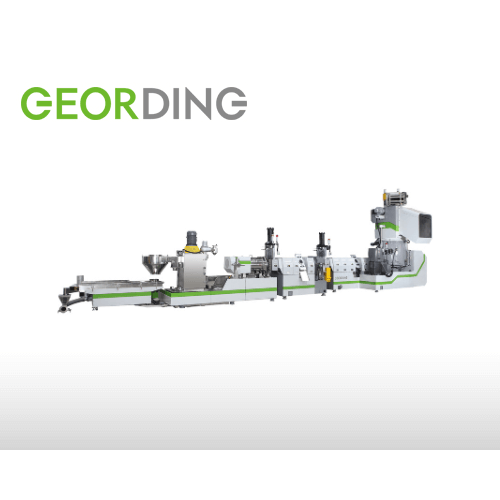
Geor-Ding specializes in plastic recycling and pelletizing machines and offers turnkey plants that cover crushing, washing, drying and extrusion. Its pelletizing range includes 3-in-1 machines in single-stage and two-stage die-face cutting versions. The integrated cutter compacts and preheats light material before it enters the extruder, while the two-stage design adds an extended venting system and dual filtration for printed or contaminated film. Geor-Ding also builds single-shaft and twin-shaft shredders for bulky plastics and for SRF/RDF preparation, and it offers site evaluation, process planning and operator training.

If your waste is printed, moist or mixed, Geor-Ding is worth a call because it configures the line around the material.
View GEOR-DING on PRM-Taiwan | Request a quote
3. POLYSTAR Machinery (Taiwan)
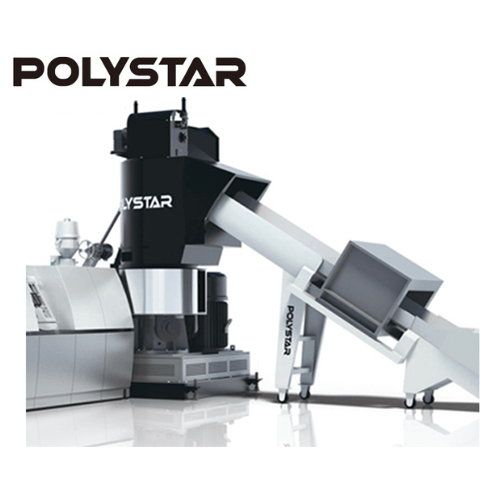
Headquartered in Tainan, POLYSTAR lists plastic recycling machines first among its two main lines, ahead of blown film extruders. Its Repro series includes Repro-Flex cutter-compactor machines for PE/PP film, raffia, woven bags and regrind; Repro-Flex Plus with two-stage extrusion; Repro-One with an integrated shredder; Repro-Direct for rigid scrap; and the compact Repro-Air with air pelletizing. POLYSTAR says it builds an average of eight Repro-Flex sets a month, and the model places filtration before degassing so it can run film with up to 95% surface print.
The company's emphasis is simple operation and maintenance, which suits film converters and packaging plants recycling their own scrap.
View POLYSTAR on PRM-Taiwan | Request a quote
4. GENIUS MACHINERY CO., LTD. (Taiwan)
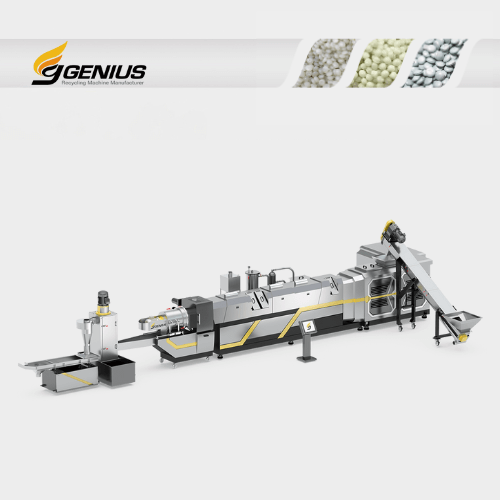
Genius focuses entirely on plastic recycling equipment and comprehensive plant planning. Its pelletizing range includes KRIEGER cutter-compactor machines in single- and two-stage versions, RECO force side-feeding and H force hopper-feeding machines, and the DWX series, which combines a squeeze dryer and pelletizer driven by one motor: it takes washed film at over 50% moisture and reduces it to 1–3% before extrusion. Genius also builds rigid and film washing lines, filtration systems, crushers and shredders, and reports more than 1,000 installations in over 85 countries.
Genius suits buyers who want washing and pelletizing planned as one plant, especially for agricultural film and other wet, dirty post-consumer film.
View GENIUS on PRM-Taiwan | Request a quote
5. GENOX RECYCLING TECH CO., LTD. (China)
Genox, based in Guangdong, focuses on solid waste recycling and builds the size-reduction stage of a recycling plant: single-shaft shredders (V, BH and K series), twin-shaft shredders (X, M and W series), pre-shredders, granulators (GC, GMC and GXC series) and pipe shredders up to the J2000. Its V series single-shaft shredders cover roughly 300 to 5,000 kg/hr depending on the model. Genox also supplies plastic washing systems, and its 3 t/h food-grade HDPE washing line has received an FDA No Objection Letter. Outside plastics, it offers recycling systems for tires, metals, e-waste and lithium batteries.
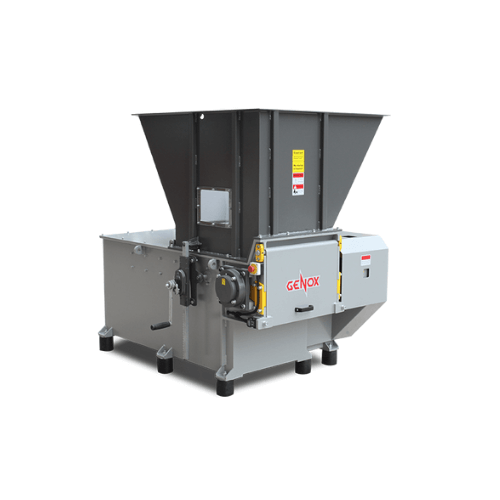
Choose Genox when shredding bulky, mixed or difficult waste is the bottleneck, or when one plant handles plastics alongside other solid waste.
View GENOX on PRM-Taiwan | Request a quote
6. LUNG MENG MACHINERY CO., LTD. (Taiwan)
Established in 1976 and also known as Dragon Plastic Machinery, Lung Meng builds blown film extruders, printing presses and bag-making machines, and developed an All In Line system in 1983 that links the three in one in-line process. Recycling is one of its six product lines and is designed for in-house scrap recycling: water-cooled PECO and Gator series, air-cooled PECO and Piranha series, and a shredder series.
Lung Meng suits film and bag producers who want recycling sized to the scrap from their own lines.
View LUNG MENG on PRM-Taiwan | Request a quote
7. CHINGCHESHUN MACHINERY CO., LTD (Taiwan)
Chingcheshun, based in Taoyuan and selling under the CYCLERSUS brand, specializes in plastic recycling equipment with a strong focus on extrusion and pelletizing systems. Its CCS3065-ACP and CCS3085-WRC are three-in-one film recycling pelletizers that combine a crusher, extruder and pelletizer in one compact unit: the crusher dries, heats and compounds the film, and the melt passes a filtration system before pelletizing. Filter types and pelletizing methods can be customized to the material, and the range also includes washing lines plus single-screw, twin-screw and lab-scale extruders.
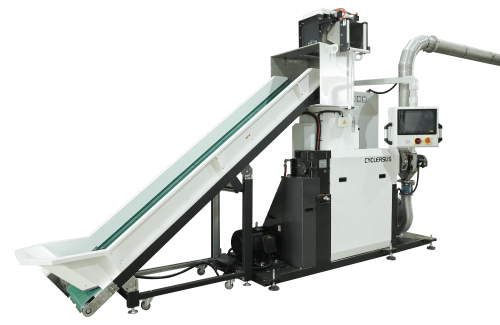
A compact option for film converters that want to pelletize their own scrap.
View CHINGCHESHUN on PRM-Taiwan | Request a quote
8. ZHEJIANG BORETECH ENVIRONMENTAL ENGINEERING CO., LTD. (China)
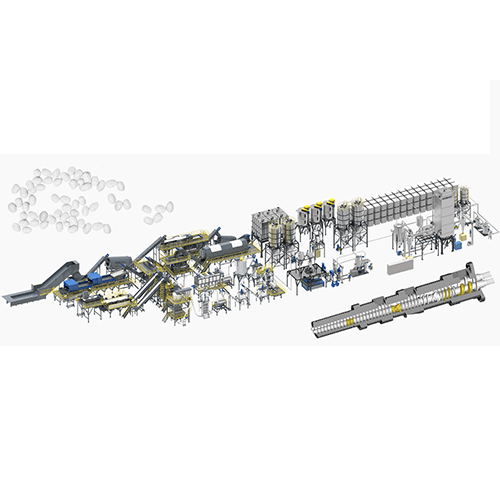
BoReTech specializes in PET bottle recycling: washing plants, rPET pelletizing lines and bottle-to-bottle plants that combine washing, pelletizing and solid-state polycondensation (SSP). Its equipment list includes pre-washers, label removers and dryers, and the company reports more than two decades of experience in PET bottle recycling and polyester staple fiber (PSF) production.
It fits buyers planning PET bottle recycling, from washed flakes to rPET pellets or a bottle-to-bottle plant.
View BORETECH on PRM-Taiwan | Request a quote
9. TSUNG CHEN MACHINERY CO., LTD. (Taiwan)
Founded in 1993, Tsung Chen specializes in plastic crushers and the equipment around them: mixers, automatic screeners and recycling machines. Its crushers for immediate recycling sit next to injection or extrusion machines and, with a conveyor, granulate sprues and rejects as they are produced; they handle PP, PVC, PE, PET and ABS and include soundproofing for noise reduction. Low-speed crushers with slanted-tooth rotors produce little dust and suit fiber-filled material, and silent heavy-duty models are also available.
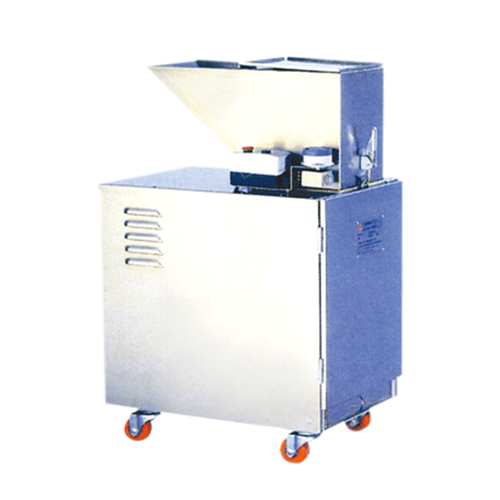
Tsung Chen fits molders and extruders who want to regrind production scrap at the machine.
View TSUNG CHEN on PRM-Taiwan | Request a quote
10. FIMIC SRL (Italy)
FIMIC specializes in automatic self-cleaning melt filters for heavily contaminated post-industrial and post-consumer plastics. Its RAS filter, the company's flagship, is designed for contaminated material, and it can be configured for the polymer, hourly output, filtration fineness and contaminant type. The range also includes double-filter and other melt-filter models, a screw pump and pelletizer cutters.
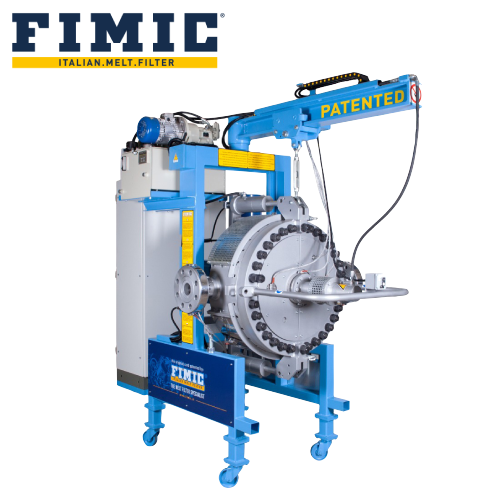
FIMIC is relevant when you are upgrading an existing line's filtration for dirtier waste.
View FIMIC on PRM-Taiwan | Request a quote
Frequently Asked Questions
What is the difference between a shredder and a granulator?
A shredder is a low-speed, high-torque machine that tears bulky items, bales and lumps into coarse pieces; a granulator is a faster cutting mill that turns smaller pieces into uniform flakes through a screen. Large recycling plants often use both: a shredder first, then a granulator.
Which recycling machine is best for plastic film?
For clean in-plant PE or PP film, a cutter-compactor (3-in-1) pelletizing machine is the usual choice because it shreds, densifies and feeds light film in one step. For printed or post-consumer film, choose a pelletizing line with stronger degassing and melt filtration, such as a two-stage design, and add a washing line when the film is dirty.
How are PET bottles recycled?
PET bottles normally go through a dedicated washing line — label removal, pre-washing, hot washing, sink-float separation and drying — to produce clean flakes. The flakes can be sold or extruded into rPET pellets; bottle-to-bottle plants, such as BoReTech's, add solid-state polycondensation (SSP) after pelletizing.
What should I send a supplier to get an accurate recycling line quote?
Specify the polymer, the form of the waste (film, raffia, rigid, bottles), photos and real samples, print and moisture level, typical contaminants, required output per hour and what the pellets will be used for. Ask for a trial run on your own material and for the list and price of wear parts such as screws, blades and screens.
Should I buy a recycling machine from Taiwan, Europe or China?
Choose by the recycling stage you need and the service you can get, not by country. On this list, the European entries cover pelletizing and melt filtration, the Taiwanese builders cover pelletizing, washing and size reduction, and the Chinese members focus on shredding and PET bottle projects. Compare trial results, local service and spare-parts lead time for the model you are offered.
Find Your Recycling Machine Partner Through PRM-Taiwan
Every recycling project starts with a different waste stream, and the right line is the one tested on yours. Use the links above to contact the listed manufacturers. If you are not sure which recycling stage or supplier fits your material, send us your requirements and we will help you match them with suitable manufacturers.
We have over 200 of the biggest and many of the smallest Taiwanese machinery manufacturers on our site and contacts with many more. Whether you are looking for full lines such as, recycling machines extruders, blow molding machines, injection molding machines and printing machines, or auxiliary equipment and parts such as gearboxes, barrels, screws, molds, dies, control systems and virtually anything related to the plastic and rubber industries including packaging. If it’s made in Taiwan, we will find it for you!