

 English - EN
  繁體 - ZH-TW
  简体 - ZH-CN
  Español - ES
  日本語 - JA
  العربية - AR
  Русский - RU
  Français - FR
The Rubber Market’s "Structural Squeeze": Navigating a High-Cost Frontier

As we move through early 2026, the global rubber industry is no longer merely experiencing a cyclical price hike; it has entered a period of "Structural Squeeze." While global GDP growth remains conservative, the demand for rubber—particularly high-performance natural grades—is decoupling from broader economic trends, driven by the relentless expansion of the electric vehicle (EV) sector and new, stringent environmental mandates.
A Convergence of Supply Shocks
The current market tightness is the result of a "perfect storm" that began in late 2025. Natural rubber futures recently stabilized at levels not seen in years, following a prolonged period of disruption in Southeast Asia. The La Niña weather pattern, which brought unseasonable rainfall to Thailand and Vietnam, severely hampered tapping activities just as the industry entered the 2026 low-production window.

Photo of effect of the recent flood to rubber plantation. Thailand, November 28, 2025. PRM Media: Supply Chain Insight: As Thailand Floods Rock the Rubber Market, Smart Manufacturers Turn to Hybrid Strategies
However, the weather is only half the story. The implementation of the EU Deforestation Regulation (EUDR) has fundamentally bifurcated the market. As global buyers scramble to secure compliant, traceable rubber, a significant premium has emerged for certified materials. This regulatory pressure, combined with aging tree populations in traditional hubs like Indonesia, has left the industry facing a projected supply deficit of nearly 700,000 tons for the 2025-2026 period.
The EV Catalyst and the Efficiency Mandate
On the demand side, the transition to electric mobility has fundamentally altered consumption patterns. Modern EVs, which are significantly heavier and produce higher torque than internal combustion vehicles, consume tires at a rate approximately 20% faster. This "hidden demand" ensures that even as traditional automotive sales stabilize, the replacement tire market remains a voracious consumer of raw rubber.
For manufacturers, the traditional "synthetic fallback" is proving less effective than in previous cycles. With green chemistry and bio-based synthetic rubber still scaling up, and traditional synthetics tied to volatile energy prices, there is no longer a cheap exit strategy.
Redefining "Resource Optimization"
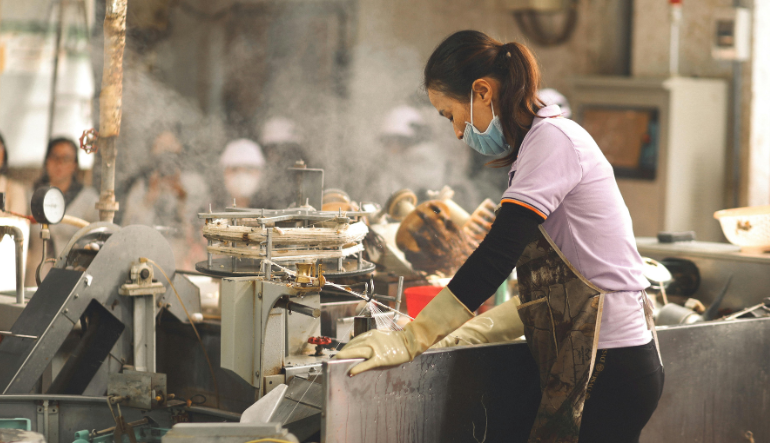
In this environment of scarcity, the industry's focus is shifting from procurement to precision. "In a market where every kilogram of rubber is at a premium, waste is no longer an operational detail—it is a direct threat to survival," notes a PRM-Taiwan market analyst.
Leading manufacturers are debuting AI-integrated smart factories at major 2026 exhibitions like TMTS, focusing on technologies that eliminate the "trial-and-error" of traditional compounding. By utilizing real-time sensor data to control vulcanization and dosing, these systems can reduce scrap rates by up to 15%, effectively allowing manufacturers to "stretch" their expensive raw material inventory further.
PRM Insight: Strategic Outlook for 2026
As the market moves toward the second half of the year, the "wait and see" strategy for the rubber industry may become a high-risk gamble. Industry leaders are increasingly securing long-term supply contracts and diversifying their sourcing toward emerging hubs like Côte d'Ivoire. More importantly, they are investing in high-efficiency hardware.
The 2025-2026 shortage is a wake-up call that the era of cheap, abundant rubber is over. At PRM-Taiwan, we see this not just as a crisis, but as a catalyst for a technological leap. We continue to bridge the gap between global buyers and the Taiwanese innovators who are building the lean, smart, and sustainable factories of tomorrow.
Source:
- ANRPC: The global rubber market is projected to face a deficit of 700,000 tons in 2025.
- European Commission: Deforestation Regulation implementation
- WardsAuto: Satisfaction gap widens between EV and ICE tires
- TAITRA Global: Breaking the Mold: Taiwan's Plastic and Rubber Industry and the ESG Revolution | Taiwan Insight
We have over 200 of the biggest and many of the smallest Taiwanese machinery manufacturers on our site and contacts with many more. Whether you are looking for full lines such as, recycling machines extruders, blow molding machines, injection molding machines and printing machines, or auxiliary equipment and parts such as gearboxes, barrels, screws, molds, dies, control systems and virtually anything related to the plastic and rubber industries including packaging. If it’s made in Taiwan, we will find it for you!