


 English - EN
  繁體 - ZH-TW
  简体 - ZH-CN
  Español - ES
  日本語 - JA
  العربية - AR
  Русский - RU
  Français - FR
Our First Time at interpack: We Thought Packaging Was an Extension of the Plastics Industry — Until We Arrived and Realized They Are Two Different Worlds
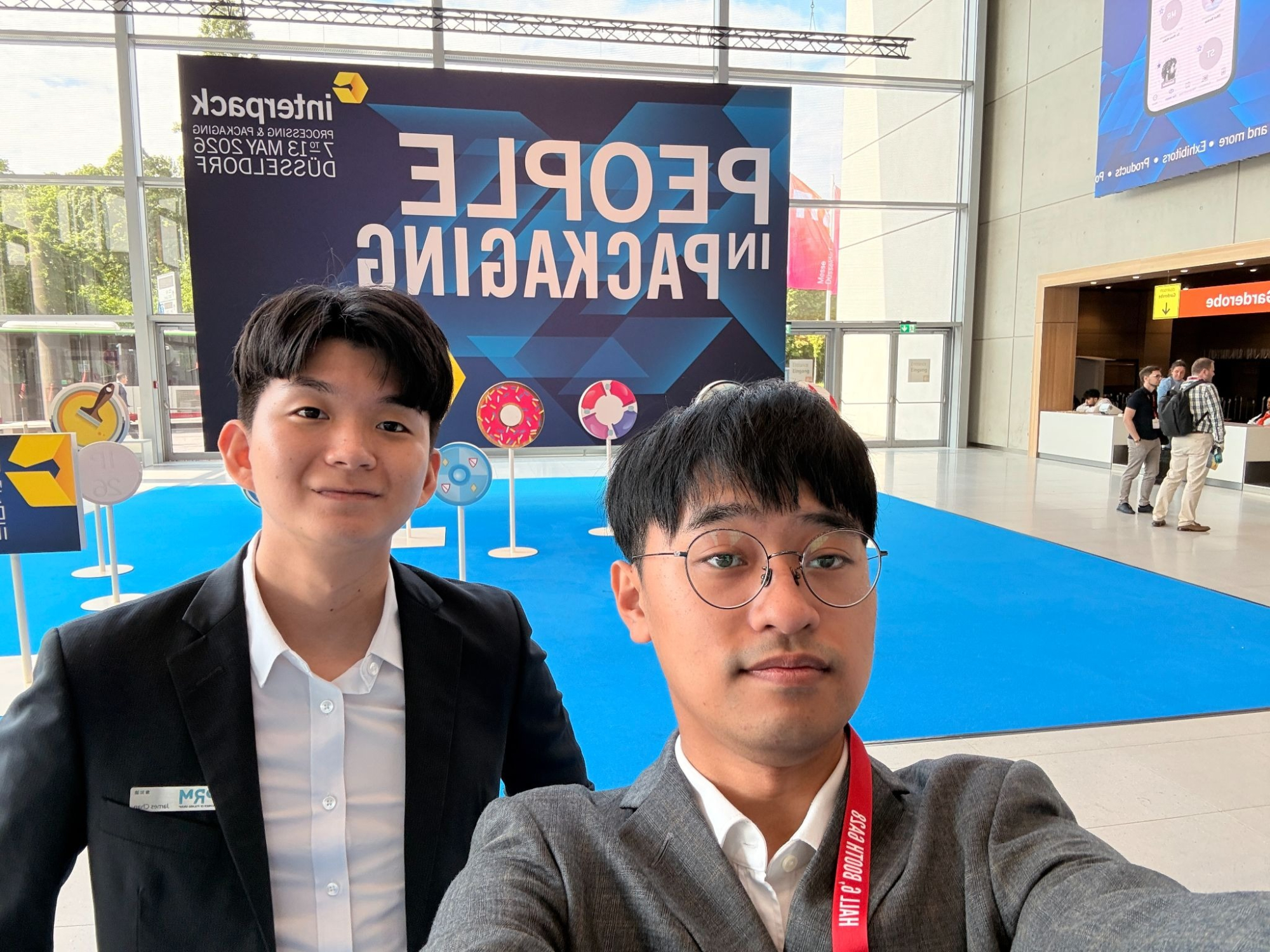
Right after wrapping up PRSE in Amsterdam, we barely even had time to unpack our luggage before heading straight to Düsseldorf, Germany, early in the morning on May 7 to catch the opening day of interpack 2026.
For PRM, this trip felt quite different.
In the past, our team's exhibition footprint has mainly revolved around the plastics and rubber machinery industry — events like K Show, CHINAPLAS 2026, NPE, and TaipeiPLAS. As for packaging and downstream converting exhibitions, the ones we were more familiar with were Taipei Pack and swop (which has officially upgraded into interpack china this year).
This time, however, PRM was officially invited by Messe Düsseldorf to attend and cover interpack as media representatives. It marked PRM's very first official step into what is essentially the global “home ground”of the packaging industry.
Because we joined through the organizer's international press program, our entire week was packed with activities. In addition to exhibitor interviews inside the exhibition halls, the itinerary also included factory visits in neighboring cities via the organizer's shuttle arrangements.
And honestly, the moment we stepped into the venue, the scale of the crowd felt every bit as massive as the K Show.
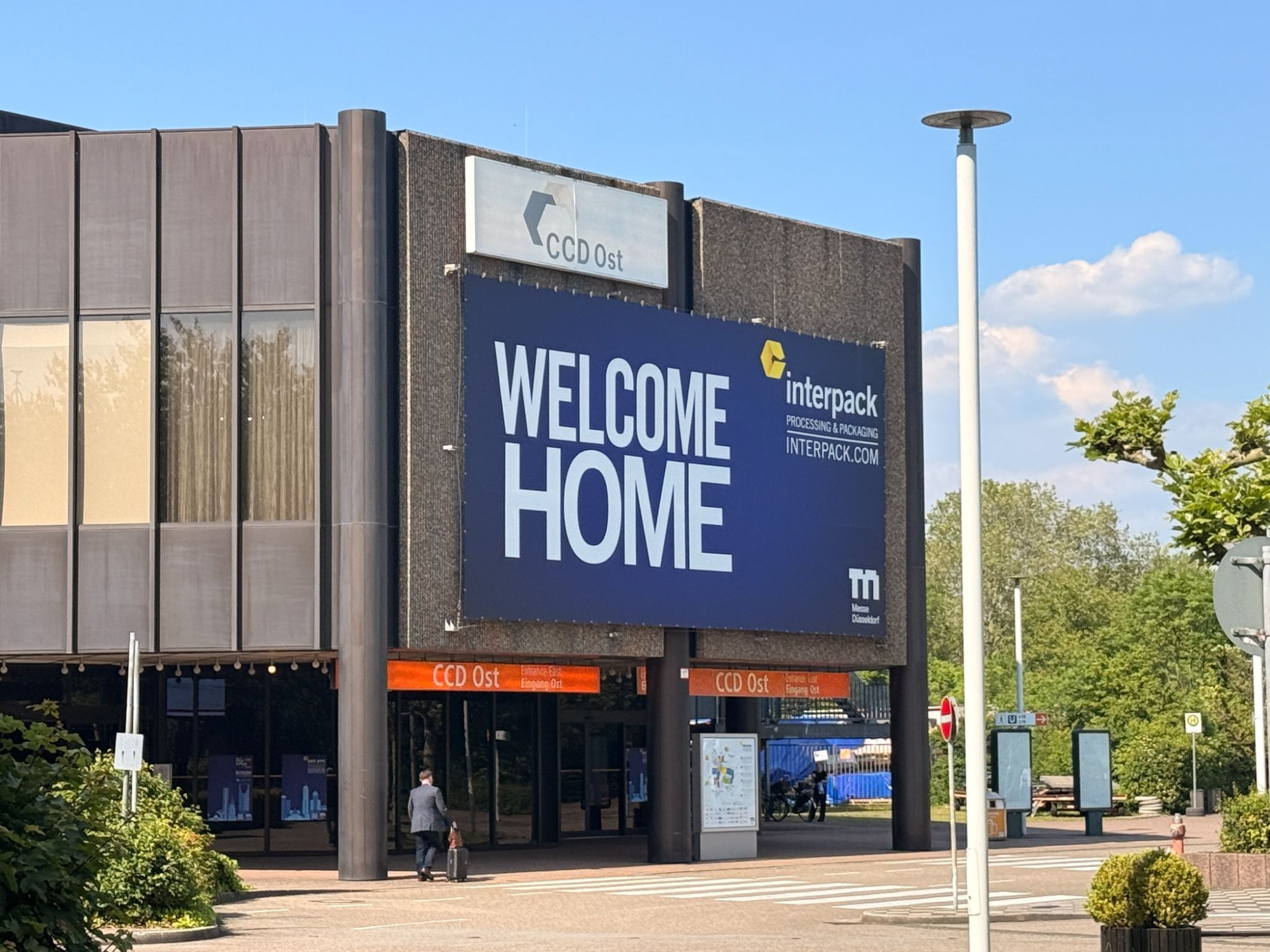
The numbers released by the organizer confirmed exactly what we felt on-site: this was the largest edition of interpack 2026 in its history.
A total of 2,804 exhibitors from 65 countries participated, while visitors came from 161 countries worldwide. Notably, 75% of attendees were from outside Germany. Meanwhile, the supporting components exhibition expanded for the first time into two halls operating simultaneously.
But beyond the official statistics, what left the deepest impression on me was the consistent message we kept hearing from exhibitors across the venue:“There may be fewer people than before the pandemic, but the ones who came are real buyers who are actively looking for solutions.”We heard this repeated again and again at different booths.
Because interpack only takes place once every three years, it creates a very unique market psychology. Regardless of whether Europe is your primary export market, the buyers who need to be there will show up. No one wants to miss this once-every-three-years global checkpoint for the packaging industry.
Taiwanese Companies at interpack: In Hall 7, Hall 12 — and Sometimes in Places They “Shouldn’t” Be
This year, most Taiwanese exhibitors were concentrated in Halls 7 and 12 at interpack 2026. However, some companies intentionally chose to bypass the official Taiwan group pavilion and register directly with the organizer to exhibit in other specialized halls.
Since PRM has traditionally focused its lens on the plastics and rubber machinery sector, walking into the Taiwanese exhibitor areas at interpack this time made us realize something important: Taiwan's packaging industry actually has a much stronger presence and visibility in Europe than we had imagined.
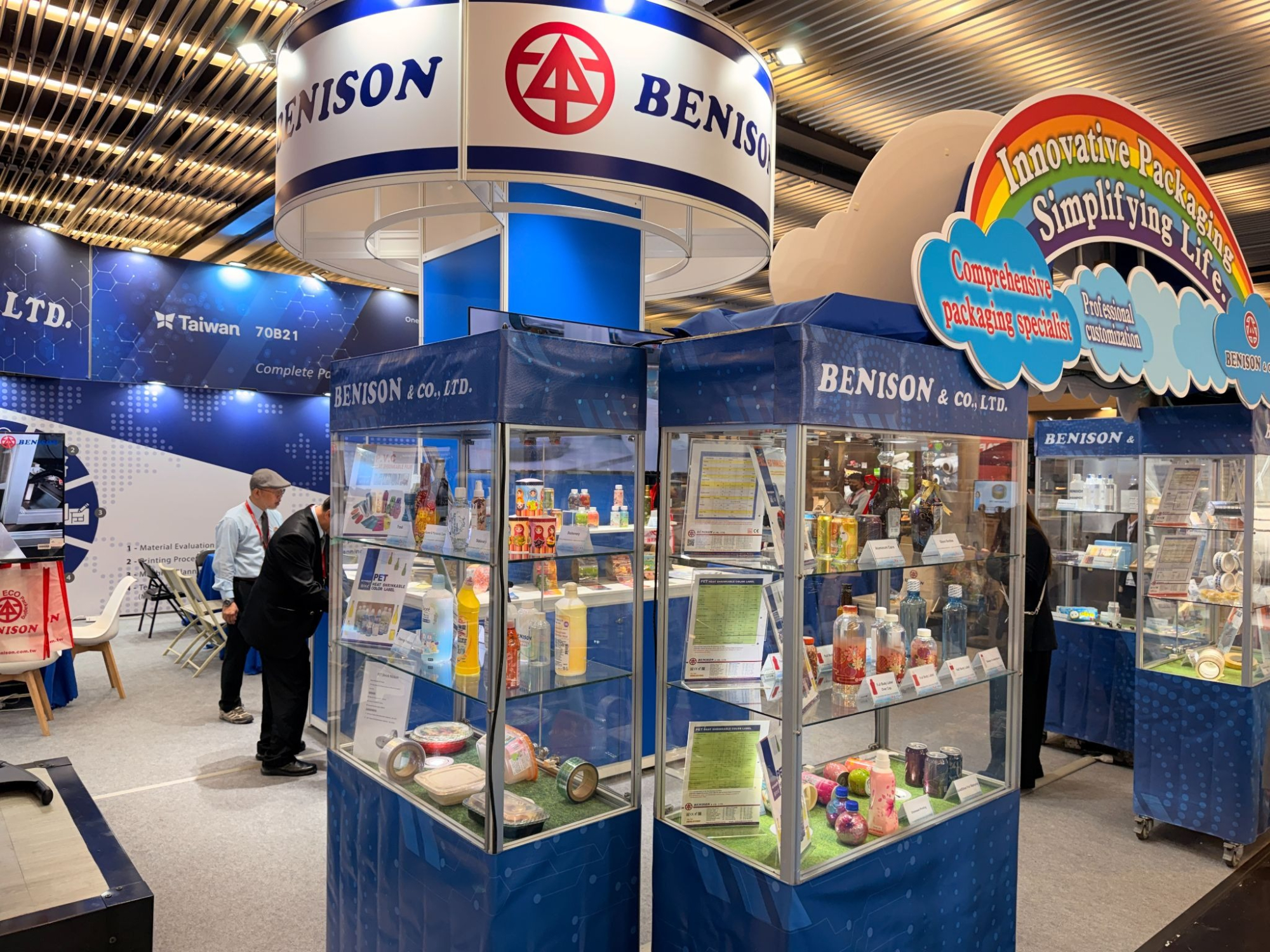
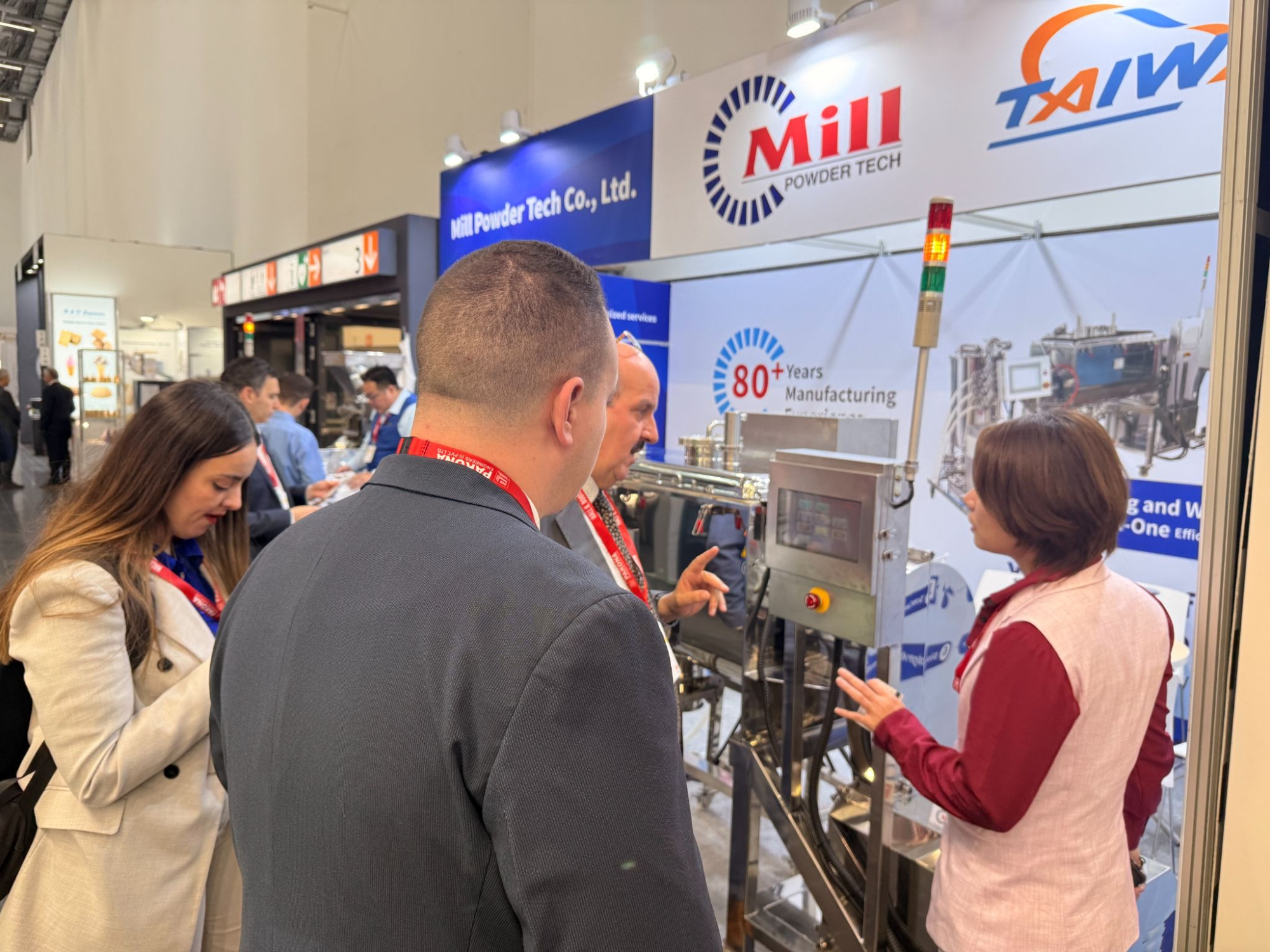
This year, Taiwan Packaging Association Chairman Biao Kuo (JAW FENG MACHINERY CO., LTD.) also led a delegation to the show. Longtime exhibitors such as Benison — whose booth has consistently maintained a strong presence over the years — once again showcased impressive scale and momentum. Familiar names from Taiwan's packaging industry, including Seal King, printing machinery manufacturer KYMC, pharmaceutical packaging specialist Kwang Dah, powder mixer manufacturer Mill Powder Tech (which appeared in the food machinery hall), Shun-Yi, and sealing machine company Wu-Hsing, all made appearances in Düsseldorf this year. As we walked through the halls recognizing familiar faces and company names, it honestly felt a bit like strolling through the aisles of Taipei Pack — except this time, the backdrop was the Rhine River.
One of the most interesting examples was FAP. As a Taiwanese packaging materials manufacturer, they decided to "go against the flow"this year. Instead of staying in the recycling materials hall where they would traditionally belong, they moved into Hall 12 and merged their booth space with Y-Fang. The result was immediately noticeable: the booth felt more spacious, visually stronger, and carried much greater presence.This wasn't a decision made by a first-time exhibitor. It was a strategic conclusion shaped by years of participation at interpack: being seen in the right hall matters more than simply being placed in the "correct"category.
We also sat down with Y-Fang for an in-depth interview to discuss the market observations they have accumulated over multiple editions of interpack — from how European buyers structure inquiries, to competitive dynamics on the exhibition floor, and how Taiwanese companies can increase their visibility in this environment. We will publish that interview separately as a dedicated feature report.
Several familiar faces from the plastics machinery world also crossed over into interpack this year, including Ming Jilee, CHUMPOWER, Webcontrol, and Da Fon Environmental Technology, which participated for the first time. Ming Jilee brought live machinery demonstrations to the venue, while both Webcontrol and Y-Fang also showcased operating equipment on-site.
But one particular comment from Webcontrol stayed in my notebook. Exhibiting in Hall 8 — the specialized printing hall — they mentioned: “We didn't dare bring our newest machines this time because we were worried about being copied. ”And honestly, that concern did not feel unfounded. Chinese exhibitors were highly visible throughout the show this year, and a significant number of them no longer looked obviously “Chinese.” Their logos, color systems, booth design, and presentation language had all become deeply internationalized. The overall scale of Chinese participation may not have matched the overwhelming “Chinese exhibition army” often seen at the K Show, but the way they have penetrated the market felt subtler — and perhaps even more sophisticated.
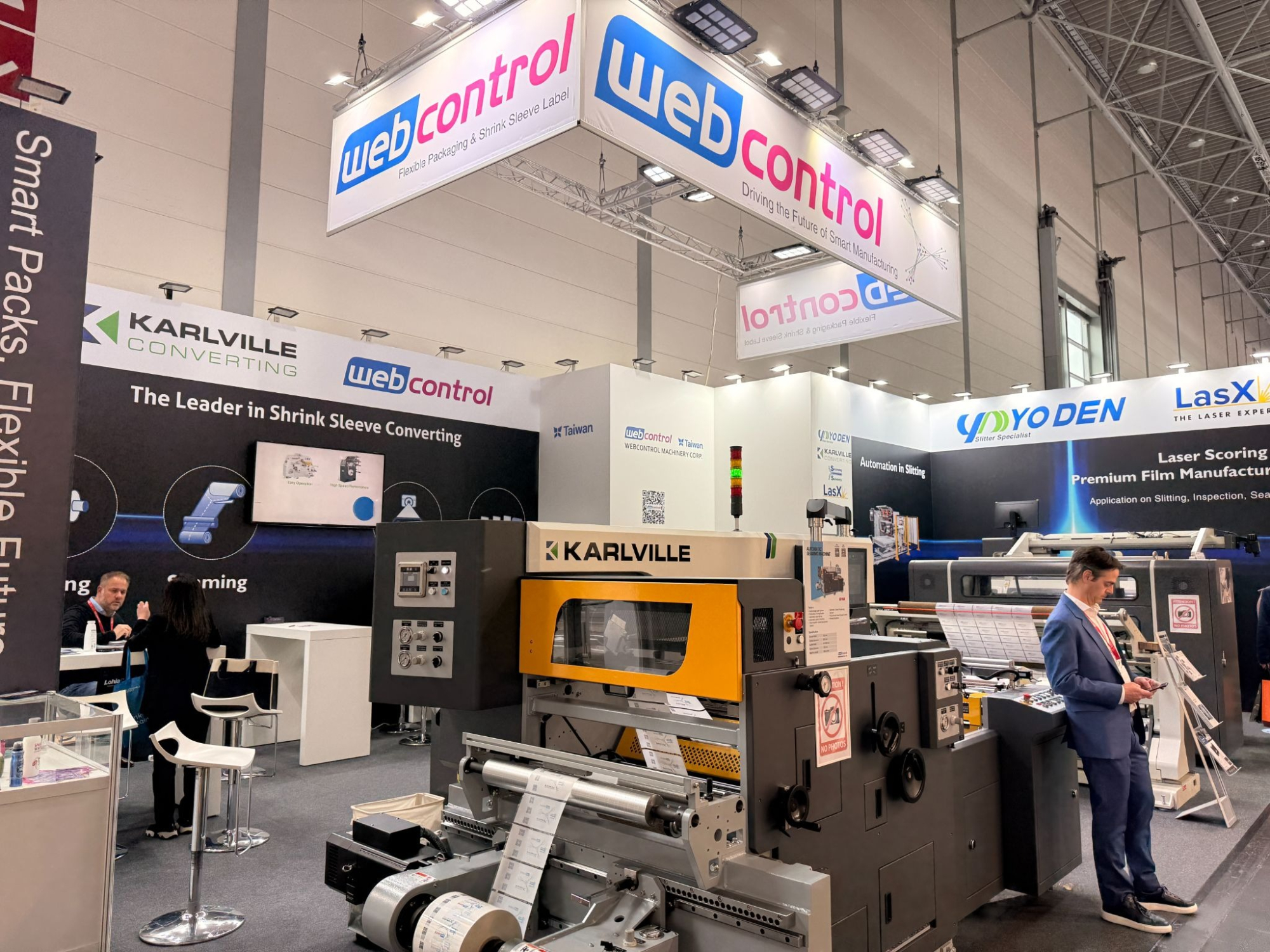
[Machine operation footage, familiar booths such as Benison and KYMC]
High Dream: The Shot We Chased for Four Days
For PRM, one of the most important client storylines at interpack this year was High Dream — our long-term multihead weigher client, who officially partnered with us for on-site video production at interpack.
For four consecutive days, we returned to High Dream's booth to film.
The spotlight of High Dream's showcase this year was the LJ-162, featuring its fifth-generation 14-head multihead weigher integrated with a lifting platform. This model combines the multihead weigher and lifting platform into a more flexible solution, with live machine operation demonstrated directly on-site for buyers.Throughout the show, visitors continuously gathered in front of the booth, watching the machine run, recording videos on their phones, and asking the sales team about specifications. Its presence was not overshadowed by any of the major international brands.
In fact, the reason we kept coming back to the booth for four days was to capture one specific shot: a wide-angle scene of people crowding around the High Dream LJ-162.It sounds simple, but the conditions had to align perfectly — enough people, the machine running, the right lighting, the machine's display lights, and the body language of visitors watching closely. My videographer and I kept returning at different times over four days just to capture that one shot properly.
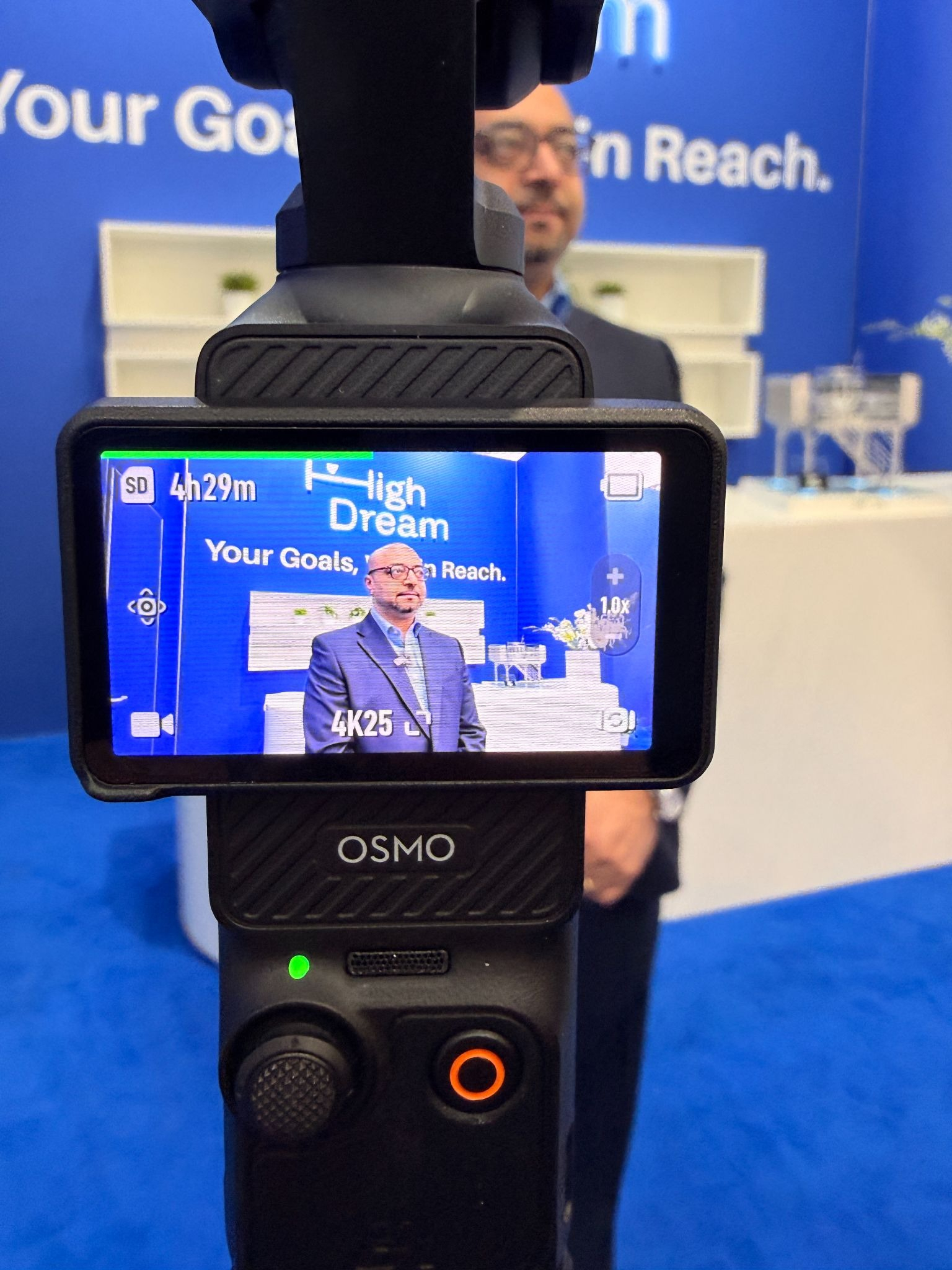
That process also made me re-understand one thing: At a venue like interpack, seeing a Taiwanese multihead weigher booth surrounded by buyers from Europe, Southeast Asia, and the Middle East, all watching the machine in action — that in itself is the most direct proof of a Taiwanese manufacturer's presence in the European market.
Relearning What “Packaging Industry Giants”Really Mean: Completely Different from What I Expected
After walking the halls for several rounds, the biggest realization was this: Although packaging can technically be considered an extension of the plastics industry, the ecosystem is completely different.
In the plastics and rubber machinery world I'm more familiar with, the business structure is relatively straightforward — one machine, one brand, one owner. But in packaging, the industry structure is far more layered and complex.I casually noted down several companies that completely reshaped my understanding of what a "major player"in packaging really looks like:
MULTIVAC (Germany)
A global leader in thermoforming packaging and a family-owned German company. After 2021, MULTIVAC gradually integrated Italian companies Italian Pack and GS Italia into its ecosystem, and this year all three appeared under the same booth identity.Alongside new machines such as the Traysealer T 305 and Chamber Belt B 625, Schneider Electric was also presented as a strategic partner.It was a classic example of German engineering strategy: not just showcasing machines, but presenting the entire ecosystem together.
ULMA Packaging (Spain, part of the Mondragon Group)
One of the world’s leading food packaging machinery companies. Their highlight this year was a Washdown-Ready Flow Pack packaging line designed for full automatic cleaning. On-site, visitors could literally watch high-pressure water jets spraying directly across the entire production line during demonstrations. Personally, I thought it was one of the most visually impressive production lines at the entire exhibition.What made it even more interesting was that ULMA exhibited side-by-side with German slicing specialist Weber. Weber handled the slicing, ULMA handled the packaging — together forming a complete integrated production line.
JBT Marel
American company JBT and Icelandic company Marel officially completed their merger in early 2025, creating a food processing machinery giant with a market value of roughly USD 6 billion. Their slogan at the booth read:“Transforming the future of food / End-to-end solutions”And they truly meant it — from slaughtering and processing all the way to packaging, the company now positions itself as a fully integrated one-stop solution provider.
Coesia (Italy)
A hidden champion group based in Bologna, with a portfolio including brands such as R.A Jones, ACMA, IPI, and G.D. Their group exhibition strategy was extremely clear: the entire booth functioned as one complete integrated solution line rather than separate individual brands.
Duravant (United States)
An industrial integration platform backed by private equity firm Warburg Pincus.Its portfolio includes more than a dozen companies such as Pattyn, Foodmate, and Marlen. What stood out was that these companies no longer operated like isolated machinery brands. Instead, they were clearly positioned as pieces within a larger strategic packaging and food-processing ecosystem.
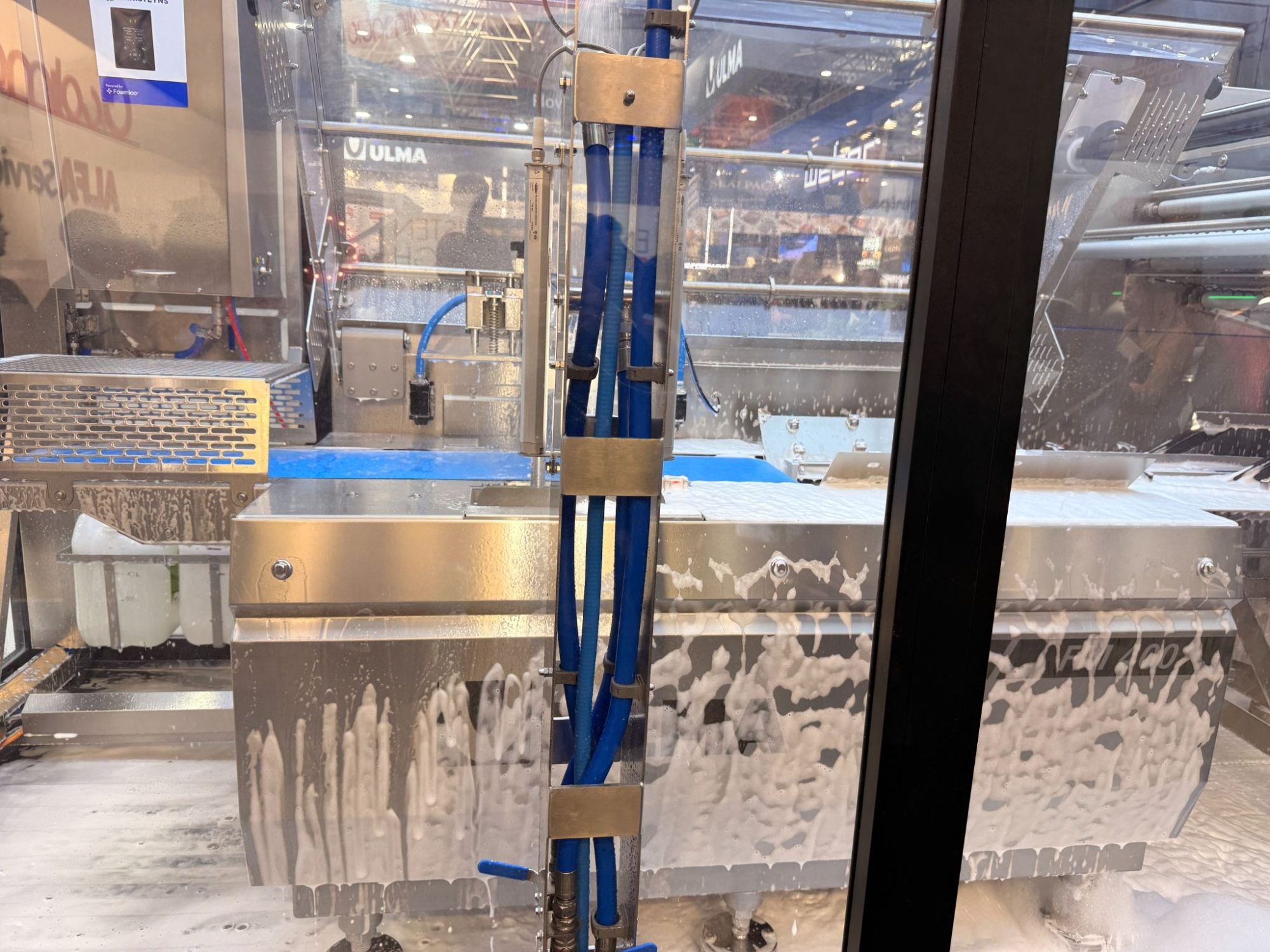
After observing these major players, I started to notice a shared strategy across the European and American packaging giants: Over the past few years, the packaging industry has been moving aggressively toward "complete line integration"— acquiring mid-sized specialized manufacturers, operating as industrial groups, and competing through ecosystem-based solutions.
For Taiwan's machinery industry, this trend is a double-edged sword. On one hand, Taiwanese manufacturers have opportunities to become OEM module suppliers, getting designed into these large integrated production lines and global solution ecosystems. But on the other hand, there is also a growing risk of being replaced if they fail to secure a critical position within the value chain. Compared with the plastics and rubber machinery sector — where the traditional logic is often “one company, one machine, one brand” — this is truly a completely different world.
Stepping Outside the Exhibition Halls: Taking the Shuttle to the igus Factory in Cologne
One part of the interpack 2026 international press program that I genuinely appreciated was this: They actively encouraged journalists to “step outside the exhibition halls.”No matter how large a trade show is, there are limits to what can truly be presented on a booth floor. The real engineering culture, manufacturing philosophy, and corporate DNA can only be understood by walking into the factory itself.
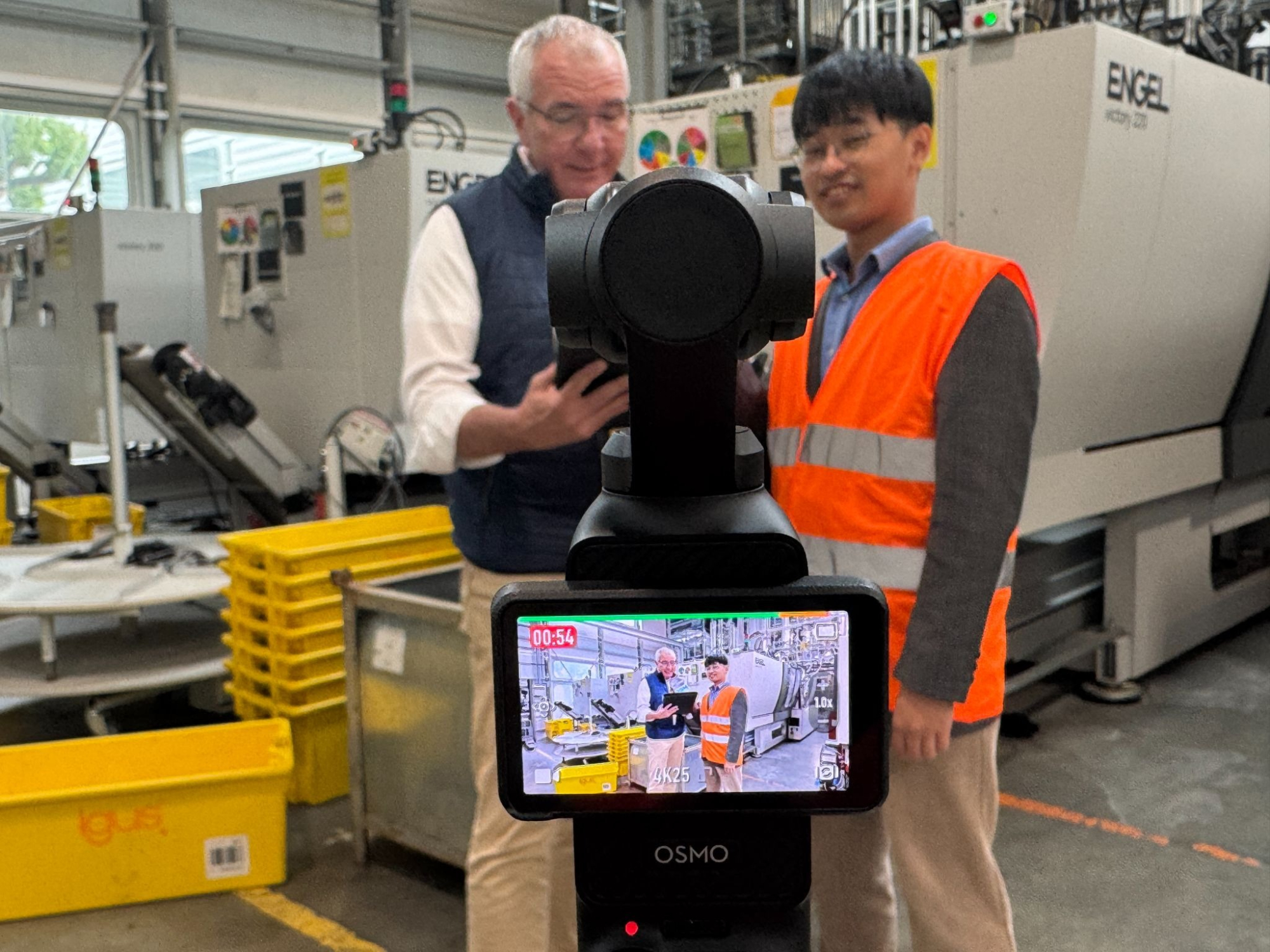
So one day, we boarded the organizer-arranged shuttle bus and traveled from Düsseldorf to Cologne to visit the global headquarters and factory of igus. igus is one of the world's leading companies in engineering plastics, linear guides, and energy chains. Over the past few years, it has also become one of Europe's most aggressive players in the fields of low-cost automation and the RBTX online robotics marketplace.
Before entering the factory, we had to change into safety shoes and put on reflective safety vests. Then we walked in from the second floor.What immediately came into view was an enormous industrial material preparation area. Yellow lines carefully mapped out logistics pathways across the floor. Employees moved through the facility on electric mono-wheel vehicles. Automated transport robots continuously delivered materials back and forth. And in the injection molding area, there were barely any workers on-site.Instead, the floor was filled almost entirely with machines from ENGEL and Arburg, paired with robotic systems from Wittmann. The level of automation was so high that it almost felt surreal.
The person guiding us was a senior manager named Thomas, who had worked at igus for over 30 years. (Interestingly, he was the second Thomas I met during this trip. The first was Thomas Dohse, exhibition director at Messe Düsseldorf. At this point, I'm convinced the name “Thomas”appears in German industry far more often than statistics can explain.) Toward the end of the conversation, Thomas suddenly smiled and mentioned that a beverage shop located inside a gas station near Feng Chia Night Market in Taiwan had once appeared in igus's German internal news.
That image stayed in my mind for the entire trip back. No matter how automated global supply chains become, Taiwanese culture and products are already appearing within the field of vision of veteran German engineers. We will publish a separate feature report covering the full factory visit experience and our deeper observations on the RBTX platform.
Day 3: Sitting Down with the Organizer's Spokesperson — and Discussing a Question I'm Still Thinking About
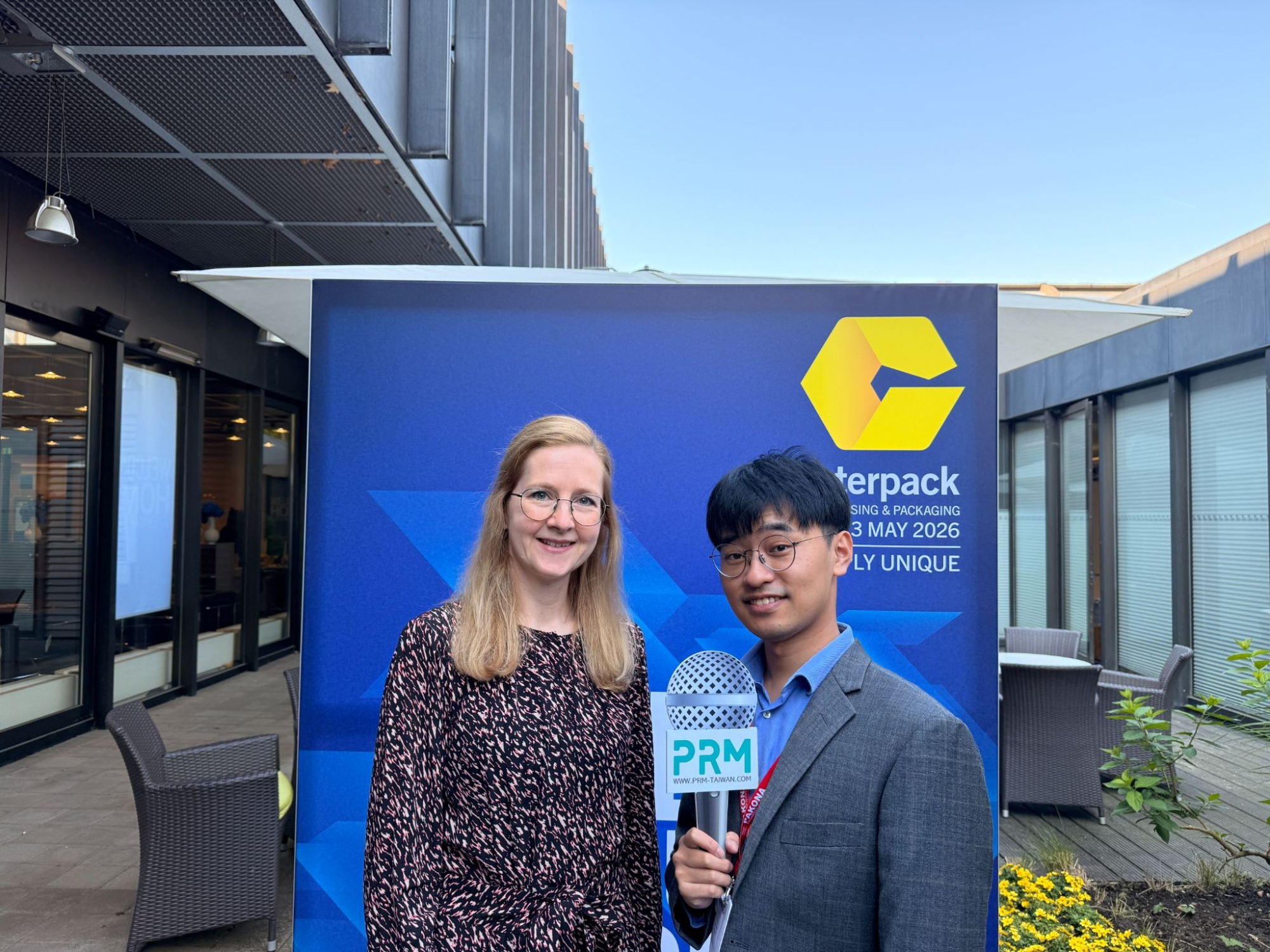
On Day 3, I interviewed Cornelia Tautenhahn, Senior PR & Press Manager at Messe Düsseldorf — essentially one of the official public voices behind interpack 2026 itself.
We started with one question:Is interpack an educator, a translator, or a platform?
As the conversation unfolded, the topic naturally shifted toward PPWR — the EU's new Packaging and Packaging Waste Regulation, which officially comes into force on August 12, 2026, just three months after this newsletter is published.
The scope of PPWR is far broader than many people realize. If your packaging enters the European market, regardless of where your company is located, you will need to comply. Empty space in e-commerce parcels cannot exceed 40%. PFAS will be banned in food-contact packaging. Starting in 2027, packaging must include digital identifiers such as QR codes linking to recycling and material information. And by 2030, all packaging must be economically recyclable. During the exhibition, entire Spotlight Forum sessions were dedicated solely to this topic.
But the most interesting part of my conversation with Cornelia was not the regulation itself.It was how differently each region interprets the regulation:
-
German processors are already discussing compliance at the engineering level.
-
Southeast Asian suppliers are recalculating their material strategies.
-
Eastern European buyers are running cost-scenario simulations.
Everyone is preparing for the future — but each market is preparing for a completely different version of that future.
And suddenly, I understood something.interpack is not there to teach the world one standard answer. Nor is it simply translating one region's logic for another.It is the room itself — the place where German regulatory rigor, Asian supply-chain realities, and European commercial pressure can sit together and genuinely hear each other. The value is not the conclusion.The value lies in making these conversations possible.
And by the way, across the seven-day exhibition, there were more than 80 forum sessions in total. Just organizing your schedule for the talks alone could easily take half a day.
Day 3 Evening: The Unexpected Exhibitor Party
After finishing the interviews that evening, something happened that pushed the conversation from earlier that day one step further in my mind.
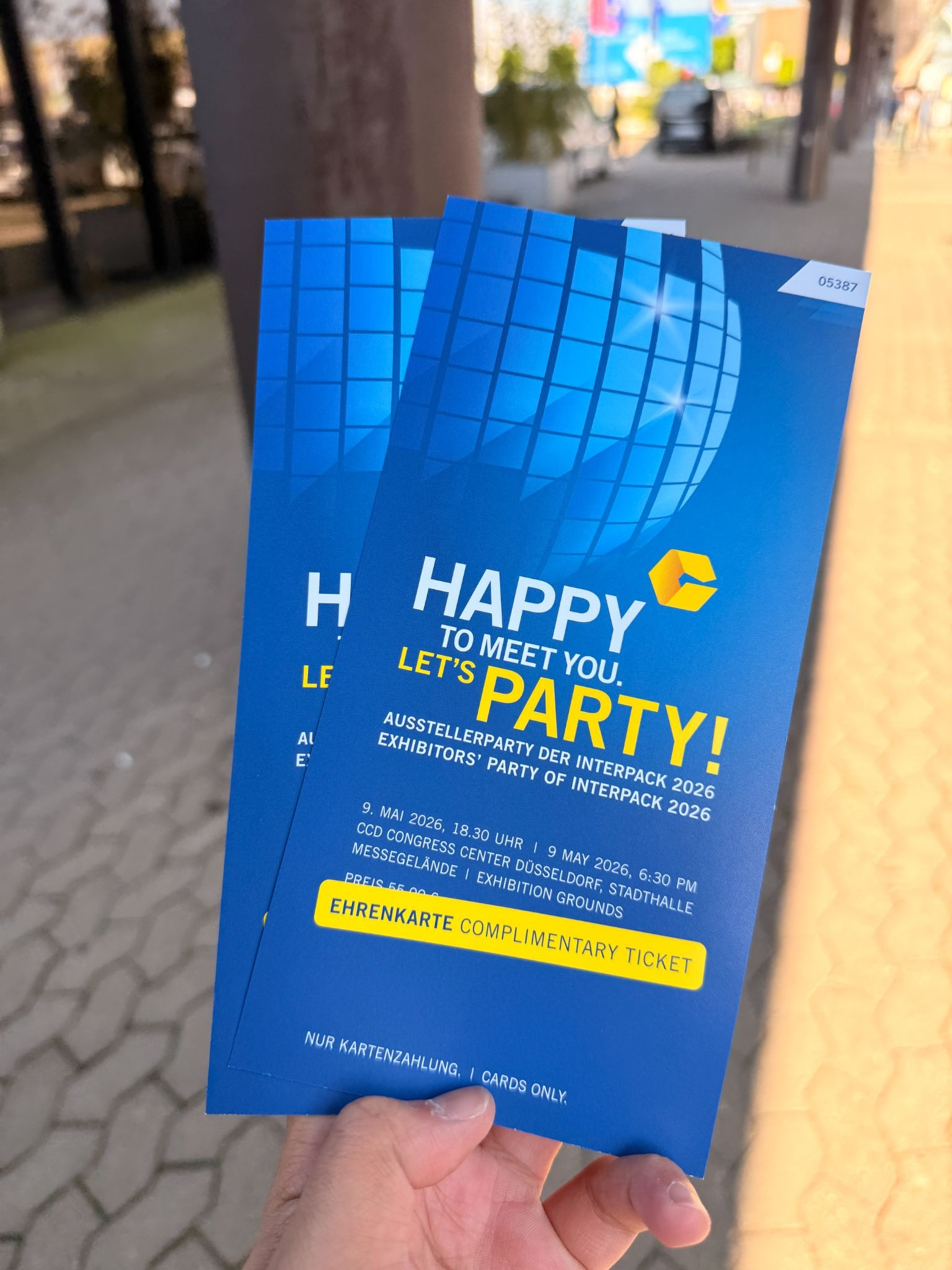
I was invited to an exhibitor party.
And importantly — not a press reception, but an exhibitor party. For someone coming from Taiwan to report on this industry, that distinction carries weight. It means trade press is no longer seen merely as outside observers standing on the sidelines. Instead, you are being counted as part of the ecosystem itself.
That night was wild. Food from all over the world. Currywurst that I'm still thinking about even now. Pizza, Pasta, Endless free food everywhere. Two live bands rotating performances throughout the night. Exhibitors from more than a dozen countries exchanging business cards over beer glasses.
The entire party felt almost like an extension of the exhibition itself —just louder, and with better food.
Reflections While Leaving Düsseldorf
After seven days at interpack 2026, I wrote one sentence in my notebook:“Packaging may be an extension of the plastics industry — but the ecosystem is truly a completely different world.”
For PRM, this trip to interpack was not just about interviewing more clients such as High Dream, Y-Fang, and Ming Jilee.It was not just about seeing ULMA's fully washdown-ready production line. And it was not just about taking a shuttle to Cologne to visit an almost fully automated igus factory.
More importantly, we confirmed something fundamental: For years, PRM's camera lens has primarily focused on the plastics and rubber machinery sector. But the downstream packaging world — with its density of information, pace of integration, and accelerating regulatory pressure — has already become another battlefield that can no longer be ignored.
The next interpack will take place in 2029. We'll see Düsseldorf again in three years. But PPWR officially comes into effect this August — and that countdown clock will not wait for anyone to be ready.
Related pictures:
We have over 200 of the biggest and many of the smallest Taiwanese machinery manufacturers on our site and contacts with many more. Whether you are looking for full lines such as, recycling machines extruders, blow molding machines, injection molding machines and printing machines, or auxiliary equipment and parts such as gearboxes, barrels, screws, molds, dies, control systems and virtually anything related to the plastic and rubber industries including packaging. If it’s made in Taiwan, we will find it for you!
 speed boat sailing along the Persian Gulf near a cargo vessel. Nurphoto | Nurphoto | Getty Images_1774425194.png)