

 English - EN
  繁體 - ZH-TW
  简体 - ZH-CN
  Español - ES
  日本語 - JA
  العربية - AR
  Русский - RU
  Français - FR
Beyond ESG Compliance: The Economic Fallout of California's SB 54 and Geopolitical Tensions Are Transforming the Packaging Supply Chain
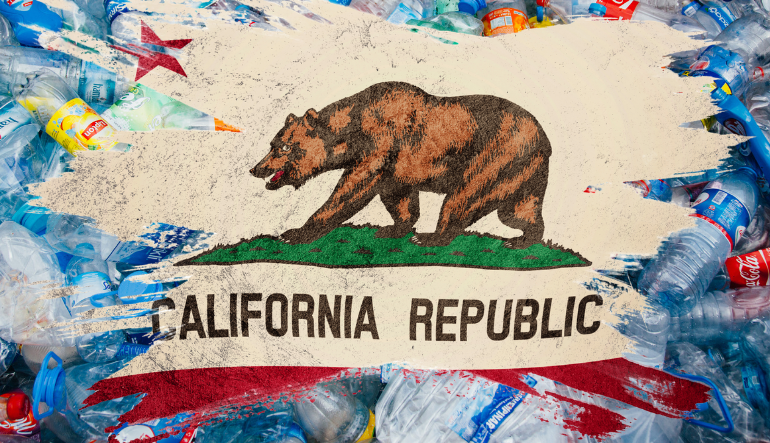
What began as a regulatory trend has rapidly escalated into a high-stakes operational crisis for the global packaging industry. Catalyzed by Europe’s Packaging and Packaging Waste Regulation (PPWR), governments are moving past policy formation and entering strict enforcement phases to internalize the environmental externalities of plastic waste. This regulatory squeeze is compounding with intense geopolitical volatility, turning Post-Consumer Recycled (PCR) plastics from a peripheral corporate social responsibility (CSR) milestone into a critical economic hedge and strategic raw material.
Enforcement Realities: Stop-Sale Orders and the Multi-State EPR Wave
Following the passing of California's June 1 Extended Producer Responsibility (EPR) deadline under SB 54, enforcement agencies have immediately shifted to active punitive measures. Regulatory bodies have begun auditing non-compliant packaging producers, deploying severe financial levers including daily fines of up to $50,000 and catastrophic "stop-sale" orders. This active enforcement presents an immediate threat to corporate cash flows and retail market access across North America.
Furthermore, this is no longer an isolated regional risk. A broader multi-state EPR domino effect is underway, with Maryland and Washington scheduled to implement mirroring registration frameworks by July 1. This coordinated legislative tightening forces an aggressive operational deadline onto global brands.
Geopolitical Asset Transition: Insights from BIR and PLAST 2026
Simultaneously, macroeconomic volatility is fundamentally restructuring the valuation of secondary materials. At the 2026 Spring Convention of the Bureau of International Recycling (BIR) in Gothenburg, industry leaders formally pushed for recycled plastics to be recognized as a "strategic, sustainable raw material." This shift was immediately palpable at the PLAST 2026 exhibition in Milan this June, where the European plastics industry converged amidst ongoing geopolitical tensions in the Strait of Hormuz, which continue to threaten the supply and pricing of energy and virgin resin.
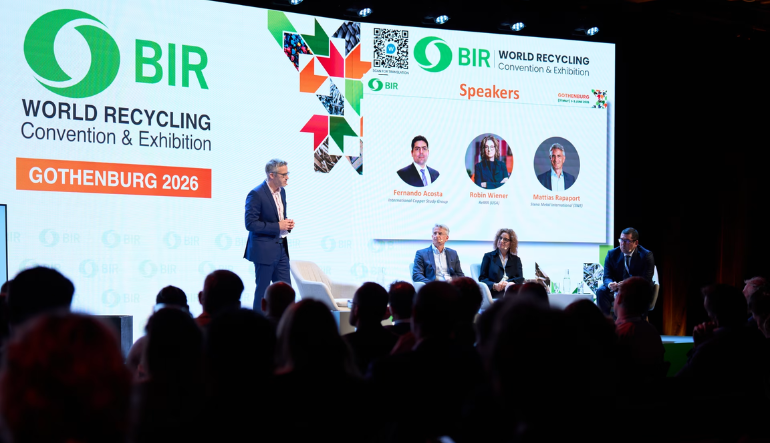
BIR Gothenburg 2026. Photo by BIR, https://www.bir.org/.
Consequently, PCR plastics are no longer viewed merely as an expensive compliance metric or an ESG line item. Instead, they function as a vital economic hedge against global energy market volatility and oil price spikes. Procurement strategies are undergoing a structural shift; corporate treasury and supply chain executives are abandoning the passive strategy of waiting for fossil fuel prices to stabilize, opting instead to secure long-term forward contracts for high-quality localized PCR to insulate their operations from macroeconomic shocks.
Regulatory Capital Consolidation: India’s Rigid Plastic Mandate
This cross-border intersection of enforcement and asset revaluation is equally evident in emerging manufacturing hubs. The Indian government’s implementation of its amended Plastic Waste Management (PWM) Rules has introduced an abrupt supply shock by mandating that PCR content in rigid plastic packaging must double from 30% to 60% by 2028.
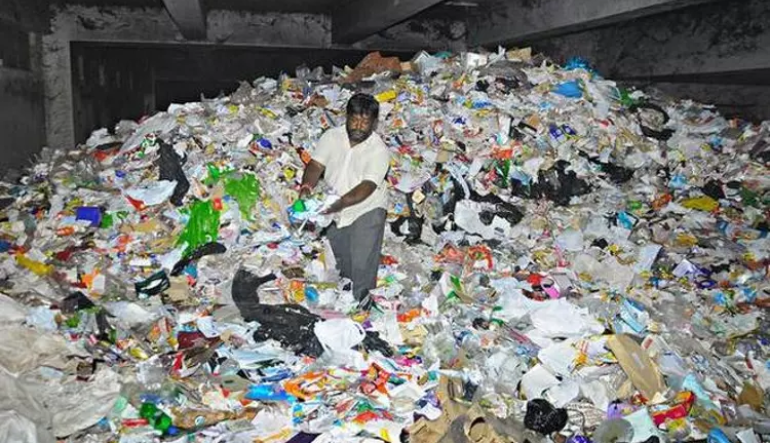
Photo by The Hindu.
Crucially, the legislation imposes absolute, legally verifiable traceability standards. This enforcement mechanism effectively dismantles the fragmented, informal recycling networks that historically subsidized low-cost packaging materials. As a result, market dynamics are forcing a rapid consolidation of the recycling industry, concentrating capital, supply, and pricing power into the hands of heavily capitalized, certified recycling conglomerates.
The New Market Equilibrium
The convergence of multi-state stop-sale enforcement, geopolitical energy volatility, and aggressive Asian PCR mandates signals a structural paradigm shift in manufacturing economics. Compliance is no longer a soft regulatory risk—it is an existential supply chain constraint. In this new market equilibrium, corporate profitability and market share will be dictated entirely by an organization's agility in eliminating multi-layer composites and securing verified, long-term secondary material pipelines.
Source:
- The Hindu: On the Plastic Waste Management (Amendment) Rules, 2026
- BIR: BIR Gothenburg 2026 – International Trade Council: Free trade remains the bedrock of a healthy recycling environment
- Recycling Product News: Plastic and rubber industry urges recyclables to be used as strategic raw materials
- CalRecycle: Plastic Pollution Prevention and Packaging Producer Responsibility Act
- Van Ness Feldman: Plastic and Packaging EPR Laws – Key Considerations and Impending Compliance Deadlines
We have over 200 of the biggest and many of the smallest Taiwanese machinery manufacturers on our site and contacts with many more. Whether you are looking for full lines such as, recycling machines extruders, blow molding machines, injection molding machines and printing machines, or auxiliary equipment and parts such as gearboxes, barrels, screws, molds, dies, control systems and virtually anything related to the plastic and rubber industries including packaging. If it’s made in Taiwan, we will find it for you!