English - EN
 繁體 - ZH-TW
 简体 - ZH-CN
 Español - ES
 日本語 - JA
 العربية - AR
 Русский - RU
 Français - FR

US Plastics Heads Toward NPE2027: Machinery Leads the Recovery as PFAS Rules Stay Unsettled
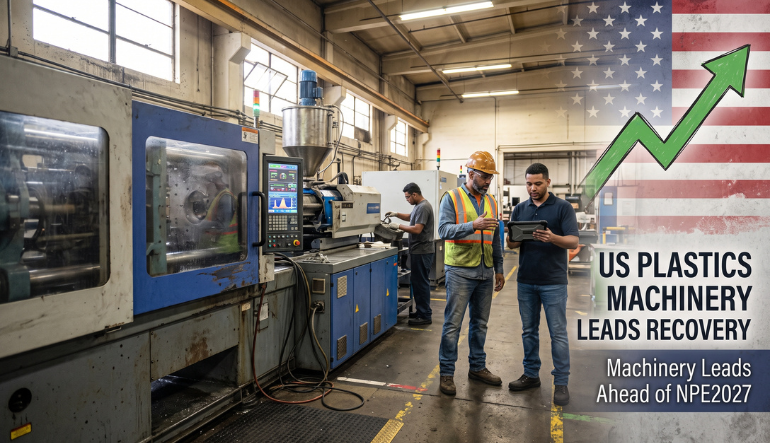
The US plastics industry will arrive at NPE2027 in Orlando next May in better shape than it has been in some time. But two forces are pulling in different directions: a production recovery led by machinery, and growing uncertainty over PFAS in plastic containers.
All four sectors forecast to grow
Plastics Industry Association (PLASTICS) Chief Economist Perc Pineda, PhD, said in his quarterly forecast that plastics machinery leads with projected growth of 10%. Plastic materials and resins production is forecast to increase by 2.7%, followed by plastic products at 1.8%. Molds production is expected to rise by 0.2%, reversing a previously forecast decline. The momentum is expected to carry into next year, with production growth expected across all four sectors in 2027, led by machinery and molds.
The wider factory economy supports the forecast. The Federal Reserve reported a 0.3% increase in US manufacturing production in September 2026, and industrial capacity utilization climbed to 76.9%.
The pressure hasn’t gone away, though. Pineda listed energy costs, continued price pressures, and skilled-labor shortages as the key challenges, and expects job losses in plastic products and molds, with modest gains in resins and machinery. Imports have also become more expensive. The Bureau of Labor Statistics import price index climbed 8.1% in September 2026 compared with a year earlier, and even excluding petroleum, it was the steepest annual gain since May 2022.
Taken together, these numbers explain why machinery is leading. Processors who can’t hire enough skilled operators and are paying more for energy are choosing to invest in equipment that produces more with fewer people and less power.
PFAS: a question mark over barrier containers
The second story is about risk, not growth. According to The Guardian, the US Environmental Protection Agency has quietly backtracked on its claim that two of the most dangerous PFAS compounds, PFOA and PFOS, have been phased out in the US. Its website previously stated that the manufacture and import of PFOA had been phased out. It now says quantities of PFOA may be produced, imported, and used by companies, and notes that PFOS remains in some limited, ongoing uses. The EPA made the change in response to a complaint from the Public Employees for Environmental Responsibility (PEER), filed under the Information Quality Act.
At the center of the dispute is Houston-based Inhance, which makes up to 200 million fluorinated barriers a year for plastic containers used across the US economy. PFOA has been found leaching from these containers into their contents at high levels. Inhance denies that the chemical leaches out in measurable amounts, describes any PFOA as an “impurity,” and says it has adjusted its process to cut PFOA impurity levels by 90%.
The EPA has tried to stop the process before. It ordered Inhance to cease production in March 2022, and again in December 2023, but a federal appeals court overturned the second order. The Guardian reports that the agency now appears to have given up on enforcing the phase-out.
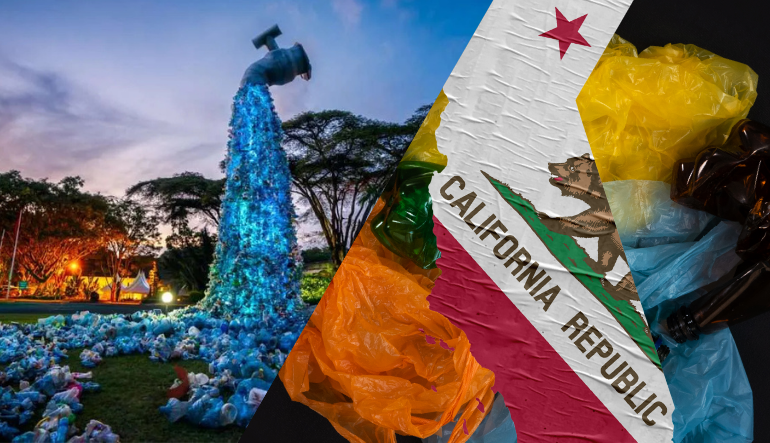
The recycling industry isn’t waiting. The Association of Plastic Recyclers stopped classifying certain fluorinated containers as recyclable, citing California’s tighter recyclability labeling rules taking effect in October 2026.
So there is no new federal ban, and none appears close. What has changed is that the government’s “phased out” position is gone, and the pressure is now coming from recyclers and state laws. For container makers and brand owners, that means real uncertainty over whether fluorinated barrier packaging will remain acceptable to their customers.
Europe has already gone further. The EU’s Packaging and Packaging Waste Regulation (PPWR) has applied since August 12, and food-contact packaging containing PFAS above strict limits can no longer be placed on the EU market.
What this means beyond the US
For machinery exporters in Asia and Europe, the US is the sector’s growth leader on paper. Tariffs remain a drag, however. Earlier this year, PlasticsToday reported that tariffs were causing hesitation, with companies delaying equipment purchases amid policy uncertainty. Suppliers who can show clear energy and labor savings will have the strongest case when buyers do commit.
For packaging converters supplying US or EU brands, PFAS requirements will reach them through their customers, wherever their factories are located. Non-fluorinated barrier options, such as multilayer co-extruded structures with EVOH, are likely to get a closer look in sourcing discussions.
NPE2027: where these trends meet
NPE2027 will be held May 3–7, 2027, at the Orange County Convention Center in Orlando, Florida, covering automation, sustainability, new materials, and manufacturing. The previous show set the scale: NPE2024 opened with more than 2,000 exhibiting companies and more than 55,000 expected attendees from all sectors of the global supply chain.

With machinery demand rising and packaging rules shifting, NPE2027 is where many buyers will make their next equipment decisions. Attendees who arrive with a shortlist get more out of five days on a show floor this size.
Start building yours on PRM-Taiwan.com, where you can compare plastics and rubber machinery suppliers and contact them directly before you fly to Orlando.
Source:
- Guardian: EPA quietly backtracks on claims US has phased out toxic Pfas compounds
- Plastics Today: US Plastics Sectors Forecast 2026 Growth
- European Commission: New EU packaging rules start to apply, including restrictions on PFAS in food-contact packaging
- PLASTICS: PLASTICS President and CEO Matt Seaholm: “Fix the Recycling System, Don’t Abandon It”
- PEER: Recyclers Ban Fluorinated Containers Due to PFAS
We have over 200 of the biggest and many of the smallest Taiwanese machinery manufacturers on our site and contacts with many more. Whether you are looking for full lines such as, recycling machines extruders, blow molding machines, injection molding machines and printing machines, or auxiliary equipment and parts such as gearboxes, barrels, screws, molds, dies, control systems and virtually anything related to the plastic and rubber industries including packaging. If it’s made in Taiwan, we will find it for you!