

 English - EN
  繁體 - ZH-TW
  简体 - ZH-CN
  Español - ES
  日本語 - JA
  العربية - AR
  Русский - RU
  Français - FR
Natural Rubber Prices Hit a 10-Year High: What Tire and Rubber Product Makers Can Do Now
Natural rubber reached 265 U.S. cents per kilogram on October 12, up 6.5% in one month and its highest price in a decade, according to Trading Economics. The rally had been building for weeks. Futures traded around 240 US cents per kilogram on September 1, near 2013 highs, and Malaysia’s SMR 20 grade reached its highest level since February 15, 2017.
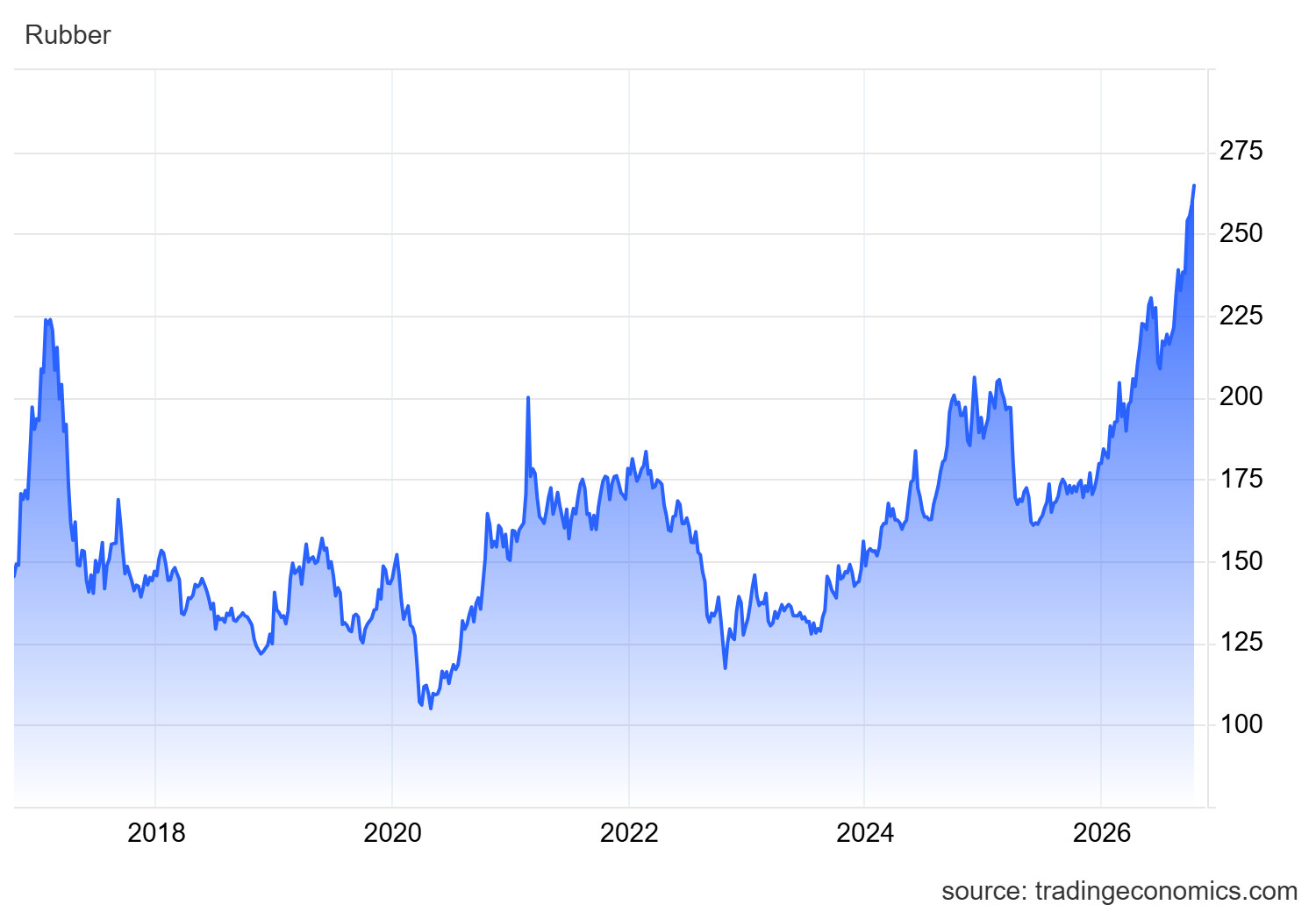
Rubber price (USD Cents / Kg) in the past decade. Image Source: Trading Economics (tradingeconomics.com)
For tire makers and rubber component producers, natural rubber now costs about 45% more than it did at the start of 2026. At that level, most manufacturers can’t absorb the increase through efficiency gains or thinner margins alone.
Why prices are climbing
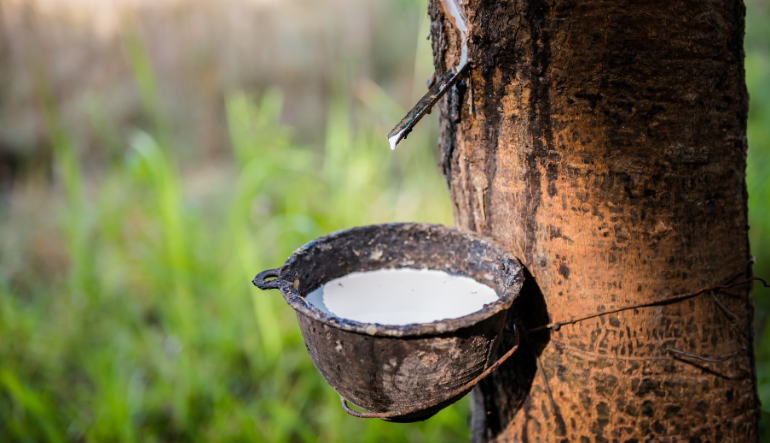
Weather triggered the latest jump. Between September 24 and 30, about 23,000 hectares of rubber plantations in Thailand’s Rayong, Chanthaburi, Chachoengsao, and Sa Kaeo provinces were damaged, affecting 7,679 rubber farmers. The rain hasn’t stopped since. In southern Thailand, excessive rainfall has disrupted tapping and constrained raw material output, while in Vietnam, intermittent rain continues to slow tapping progress.
Oil is the second factor. Natural rubber competes with synthetic rubber, which is made from crude oil, so when oil prices rise, synthetic rubber costs rise too. That closes the usual escape route. When natural rubber gets expensive, manufacturers normally switch part of their volume to synthetics such as solution styrene-butadiene rubber (SSBR). Right now, synthetics aren’t much cheaper.
Supply is also tight on paper. Industry projections put 2026 global output near 15.3 million tonnes against 15.4 million tonnes of demand, and Chinese tire producers ramped up buying ahead of Golden Week in early October.
Buyers are pushing back, though. Downstream resistance to high-priced raw materials persists, procurement remains cautious, and a concentrated restocking cycle is unlikely after the holiday. That tug-of-war points to prices that stay volatile at a high level, not a quick retreat.
What procurement teams can do
Buying on the spot market is the most expensive way through a rally like this. Splitting purchases into several futures hedges or fixed-price contracts at different dates spreads the risk, so no single bad entry point sets your cost for the quarter.
The second step is getting closer to your tier-1 suppliers. Ask them for visibility into their raw rubber inventory, and get allocation commitments in writing before spot shortages get worse.
What engineering teams can do
Start qualifying synthetic alternatives now, including newer SSBR formulations, even if they aren’t cheaper today. Qualification takes months. If prices stay high into 2027, the plants that already have approved alternatives will be the ones able to switch.
Also review compound formulas on non-critical parts. Where the performance spec has headroom, there is often room to reduce natural rubber content without the customer noticing any difference.
Where machinery fits in
When rubber costs this much, every rejected part costs more too. Accurate compounding, stable extrusion, and tight process control in molding all reduce how much expensive material ends up as scrap.
PRM-Taiwan.com lists about dozens rubber machinery manufacturers, covering high-precision compounding lines, automated extrusion systems, and energy-efficient injection molding machines.
Browse plastic and rubber machinery suppliers on PRM-Taiwan.com and send your inquiry directly to the ones that fit your line.
Source:
We have over 200 of the biggest and many of the smallest Taiwanese machinery manufacturers on our site and contacts with many more. Whether you are looking for full lines such as, recycling machines extruders, blow molding machines, injection molding machines and printing machines, or auxiliary equipment and parts such as gearboxes, barrels, screws, molds, dies, control systems and virtually anything related to the plastic and rubber industries including packaging. If it’s made in Taiwan, we will find it for you!