

 English - EN
  繁體 - ZH-TW
  简体 - ZH-CN
  Español - ES
  日本語 - JA
  العربية - AR
  Русский - RU
  Français - FR

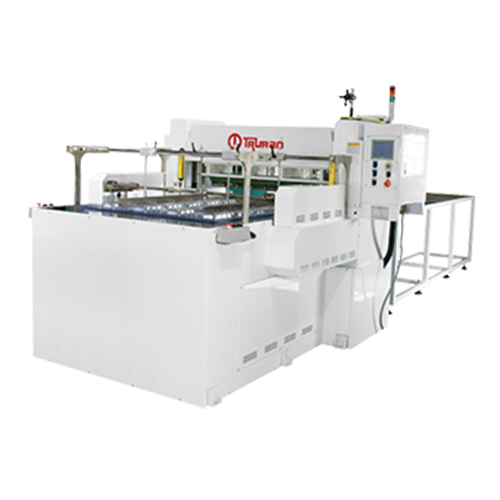
MULTI-LAYER AUTOMATIC FEED CUTTING MACHINE VAC-310
Categories : Cutting Machines
Double-Axle Synchronous Pressurizing Mechanism: Performs the pressurization with double output axle to provide powerful and stabilized pressurizing capacity. Automatic Feed Mechanism: Uses servo control to carry out the setting according to the breadth and length of the material. Alignment Mold System: Performs concurrent cutting process after locking the material in place. Parameter Storing System: Performs module-based memory for the production figures to facilitate the parameter management. Cutting Plate Turntable Mechanism: Sets the offset length to achieve over 95% of plate utilization rate after cutting. High-Efficiency Boosting Circuit: Reduces over 30% of power consumption as compared to conventional circuit.

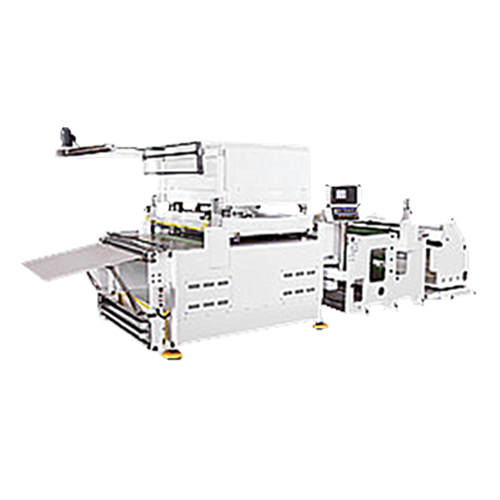
HIGH ACCURACY AUTOMATIC CUTTER TRC-350
Categories : Cutting Machines
Automatic justitying tension control system. This system aim to a design for winding materials, thus making receipt control more steady and smooth. Excellent and stable bottomdead center accuracy. With it's specially-designed characteristic and precision processing, this machine is characterized with highly stable cutting accuracy that makes 100% of yield for finished product. Cutting depth adjustment mechanism. It's design adopts one featuring paramenter input along with the memory module that results in an easy operation. This machine which can be adjusted to full-cut or semi-cut mondel features a rapid speed in setup.
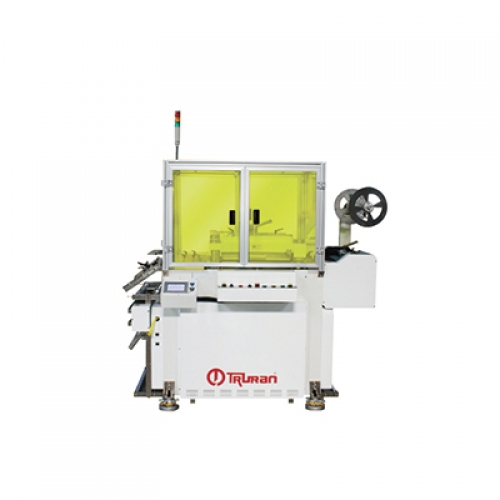
High-accuracy Mini-sized Automatic Cutting Machine-APL-300
Categories : Cutting Machines
●Well-designed and Stabilized Bottom Dead-point Accuracy: Specially designed machine structure and basic machining method, which provides extremely high cutting accuracy and stability. ●User Friendly Operation Interface: Digitalized parameter setting to facilitate the SOP management, while saving lengthy education and training time. ●Automatic Lubrication System: With Automatic Lubrication System, it simplifies the procedure of daily maintenance. ●Cutting Depth Adjusting Mechanism: Totally digitalized depth adjustment in achieving convenient and fast adjusting. ●Full-cut and Semi-cut Machining Effect: The cutting depth can be adjusted to the minimal 0.003mm in providing high accuracy for easier full-cut and semi-cut machining effect. ●Secondary Machining Flexibility: It is flexible for carrying out inter-station alignment cutting. ●Steel Form Cutting Flexibility: It supports steel form punching and cutting.
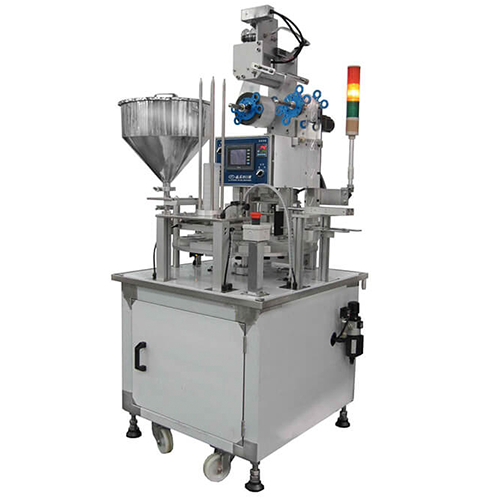
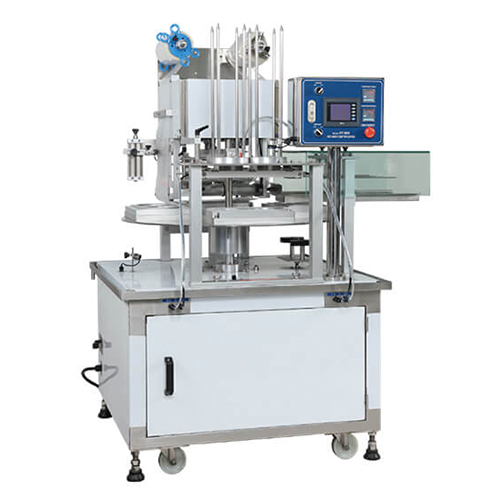
AUTO ROTARY SEALING MACHINE-ET-85
Categories : Sealing Machines
1. PLC with Index Gear Conveyor, Inverter Speed Control and Touch Screen Operation. 2. Stainless Steel frame and Anodized Aluminum.

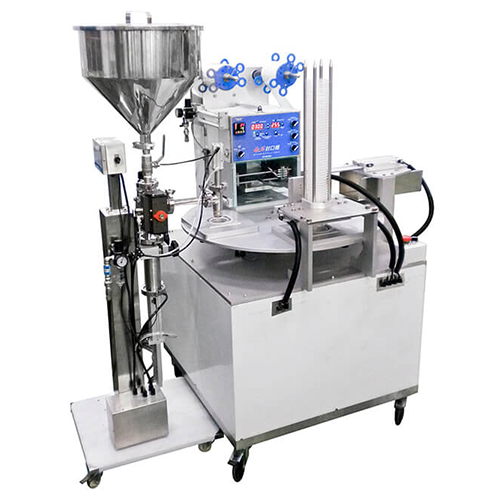
AUTO ROTARY SEALING MACHINE-ET-80
Categories : Sealing Machines
1. PLC with Index Gear Conveyor, Inverter Speed Control and Touch Screen Operation. 2. Stainless Steel frame and Anodized Aluminum.


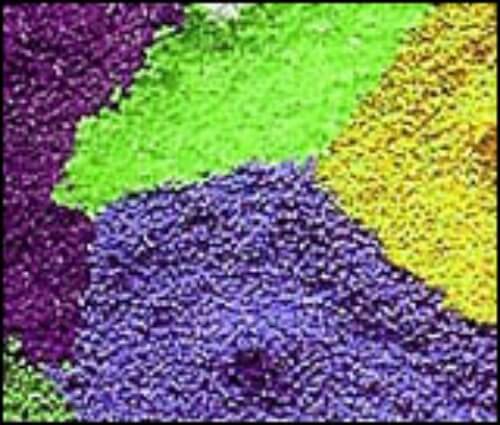
Conductive & Anti-Static Plastic Compounds
Categories : PP Resin
This category includes permanently conductive and anti-static plastic pellets, formulated for use in trays, carriers, and components in ESD-sensitive environments. Surface resistivity ranges from 10³ to 10¹¹ Ohm/sq depending on the grade (permanent or dissipative). Glass fiber-reinforced conductive options are also available for applications requiring enhanced strength and durability.

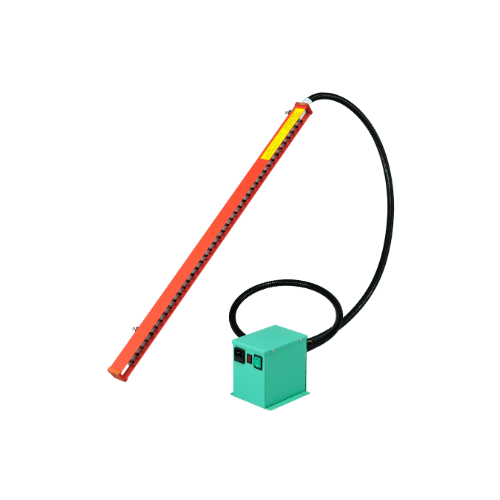
Soft Acicular Anti Static Device(CE)
Categories : Welding & Surface Treatment Equipment
Soft acicular anti-static devices feature high performance, high security and flexible installation methods, comprising one or two soft acicular anti-static rods, and a 5KV anti-static generator. Different from traditional acicular anti-static rods that use a single stainless steel needle to discharge static charge, the single discharging needle unit of a soft acicular anti-static rod is comprised of up to a hundred carbon fiber filaments, to dramatically extend discharging range, and hence enhance its anti-static efficiency. In installation, the installation distance of a soft acicular type can reach as far as 30 centimeters, which is 10 times more than the traditional acicular type, which is a very flexible approach for users, saving them trouble in production flows caused by installation distance. It can be used to adapt to a wide variety of combinations on machines for various industrial manufacturing purposes, for instance, printing machines, packaging machines, photoelectric machines and textile machines. In safety, most traditional anti-static generators are 10 to 13KV, while the soft acicular anti-static rod working with a 5KV generator can reduce safety hazards resulting from hypertension discharge, without compromising anti-static performance due to reduced voltage. In performance, traditional anti-static devices have a limited efficiency rate, at approximately 60%~70%. The optimal efficiency of the soft acicular anti-static device, when an appropriate number of modules are installed optimal locations, can be as high as 80% or more. (Actually, surveyed readings may depend on customer’s working environment, materials, machine speed and hygrometric conditions on the day of measurement). Our soft acicular anti-static rod has been awarded patent rights in the Republic of China (invention patent certificate No. I 315166) and the People’s Republic of China (new design patent certificate No. 1840367). Besides domestic sales in Taiwan, our products are exported to dozens of countries and highly acclaimed by customers. We also provide anti-static consultancy service. Your comments are welcome.

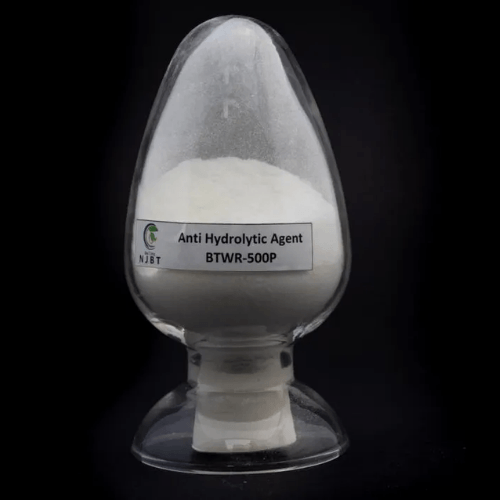
Anti-hydrolysis agent
Categories : Additives
BTCE-9013 is a polymeric epoxy functionalized chain extender. The epoxy functional groups in its structure can react with the terminal carboxyl, hydroxyl, and amino groups in long-chain resin molecules to extend the polymer chain, thereby improving the resin's mechanical properties, intrinsic viscosity, and inhibiting polymer hydrolysis. It can be used in food contact materials. BTCE-9013 is generally co-extruded with modified resins using twin-screw or single-screw extruders. The recommended dosage for bio-based and biodegradable plastics such as polybutylene adipate/terephthalate (PBAT), polylactic acid (PLA), polybutylene succinate (PBS), polymethyl ethylene carbonate (PPC), and polyhydroxyalkanoates (PHAs) is 0.2-0.8 phr. The recommended dosage for condensation-based recycled plastics such as polyamide (PA), polybutylene terephthalate (PBT), polycarbonate (PC), and polyethylene terephthalate (PET) is 0.2-1.5 phr. The specific dosage depends on the number of active functional groups in the resin and the performance requirements of the product.