

 English - EN
  繁體 - ZH-TW
  简体 - ZH-CN
  Español - ES
  日本語 - JA
  العربية - AR
  Русский - RU
  Français - FR
Blown Film vs. Cast Film: Which is the Right Fit for Your Packaging Line? PRM Explains!
In the dynamic world of plastic packaging, one of the most frequently asked questions we encounter is: "Should I choose Blown Film or Cast Film?"
We have to say, it's a bit like asking whether an off-road vehicle or a sports car is better! There is no absolute winner, only the "perfect solution tailored to your end products and production line requirements." While both films originate from high-temperature melting of plastic pellets (the extrusion process), the subsequent "cooling and forming" magic gives them entirely distinct physical personalities.
Today, as your trusted industry guide, PRM will take you on a deep dive into the manufacturing DNA of both films, helping you pinpoint the exact machinery you need for your next big investment!
Demystifying the Core Processes: "Blowing Bubbles" vs. "The Water Slide"
To truly understand their differences, we need to step onto the factory floor and see how they are born:
● The Blown Film Process — The Art of the Balanced "Bubble"
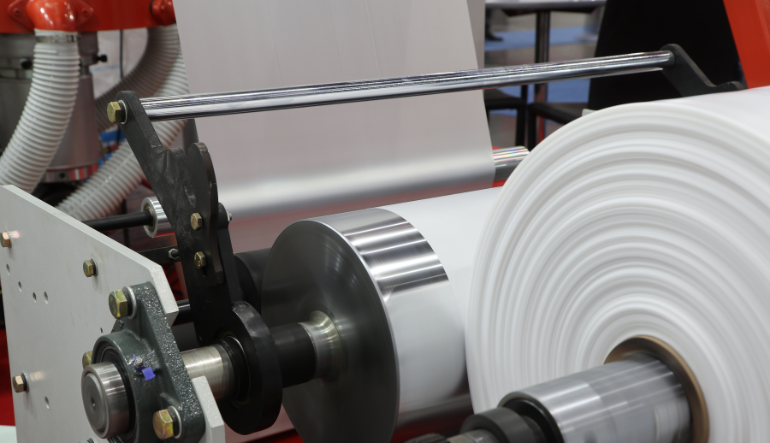
After molten plastic is extruded through a circular die, air is injected into the center, causing it to expand vertically like a giant, continuous balloon. This expansion stretches the film simultaneously in both the "transverse" (hoop) and "machine" (longitudinal) directions, creating a biaxial orientation. The bubble is then cooled by surrounding air, flattened by nip rollers, and wound into rolls. This two-way stretching is the secret behind its incredible toughness.
● The Cast Film Process — The Ultimate "Water Slide" Quench
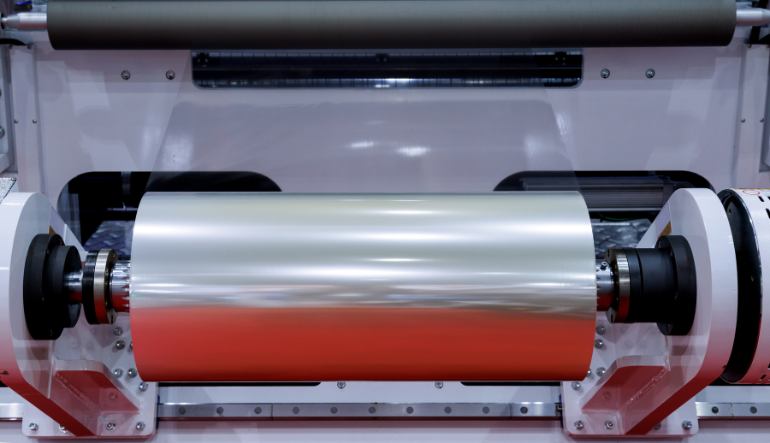
There are no bubbles here! Instead, this process uses a flat T-die. The high-temperature molten plastic flows out like a waterfall, landing directly onto a massive, highly polished metal cylinder equipped with an internal cooling system (the chill roll). This extreme, rapid cooling—known as "quenching"—freezes the polymer molecules before they have time to crystallize, granting cast film its unparalleled transparency.
The Ultimate Showdown: Performance Advantages & Trade-offs
Now that we know how they are made, let's see how they perform in the real-world arena:
1. Strength & Durability: Blown Film Takes the Crown
If you are looking for a "tough guy," blown film is your go-to. Thanks to its biaxial stretching, blown film boasts exceptionally balanced tensile strength and significantly higher resistance to tearing and puncturing. In contrast, cast film is primarily uniaxially stretched; while it is strong along its length (machine direction), it is much more vulnerable to tearing when subjected to transverse stress.
2. Clarity & Gloss: Cast Film Shines Bright
Want your products to sparkle and clearly stand out on retail shelves? Cast film is your premium choice! The rapid quenching process prevents large crystals from forming, resulting in ultra-low haze, superior clarity, and an excellent glossy finish. Because blown film cools much slower in the air, higher crystallization occurs, giving the final product a slightly hazier, less transparent appearance.
3. Thickness Control & Production Speed: Cast Film is Faster and Steadier
Because cast film is drawn directly against a precision-engineered chill roll, it maintains highly uniform and consistent thickness across its entire web width. Furthermore, cast film extrusion lines generally operate at much higher speeds than blown film lines. For buyers focused on high-volume production (like stretch wrap), this translates to a maximized Return on Investment (ROI) and lower unit costs. Blown film, on the other hand, deals with the inherent instability of air cooling, making precise thickness control more challenging.
Conclusion: Which Film Fits Your Market Best?
When making your decision, ask yourself one critical question: What are the most essential characteristics for my end product?
● When to choose a "Blown Film Extrusion Machine":
If your primary focus is puncture resistance, high load-bearing capacity, and heavy-duty protection.
Ideal Applications: Agricultural films, construction liners, heavy-duty shipping sacks, and shopping bags.
● When to choose a "Cast Film Extrusion Line":
If your primary focus is premium visual transparency, exceptional thickness uniformity, and high-speed mass production.
Ideal Applications: Food packaging (e.g., bread bags), magazine wraps, high-clarity retail packaging, and pallet stretch wraps.
Visit PRM-Taiwan.com today to find your most reliable machinery partner, and let us help you elevate your production efficiency and product quality to the next level!
We have over 200 of the biggest and many of the smallest Taiwanese machinery manufacturers on our site and contacts with many more. Whether you are looking for full lines such as, recycling machines extruders, blow molding machines, injection molding machines and printing machines, or auxiliary equipment and parts such as gearboxes, barrels, screws, molds, dies, control systems and virtually anything related to the plastic and rubber industries including packaging. If it’s made in Taiwan, we will find it for you!