

 English - EN
 繁體 - ZH-TW
 简体 - ZH-CN
 Español - ES
 日本語 - JA
 العربية - AR
 Русский - RU
 Français - FR

Converting Machines: How a Roll of Film Becomes a Pouch
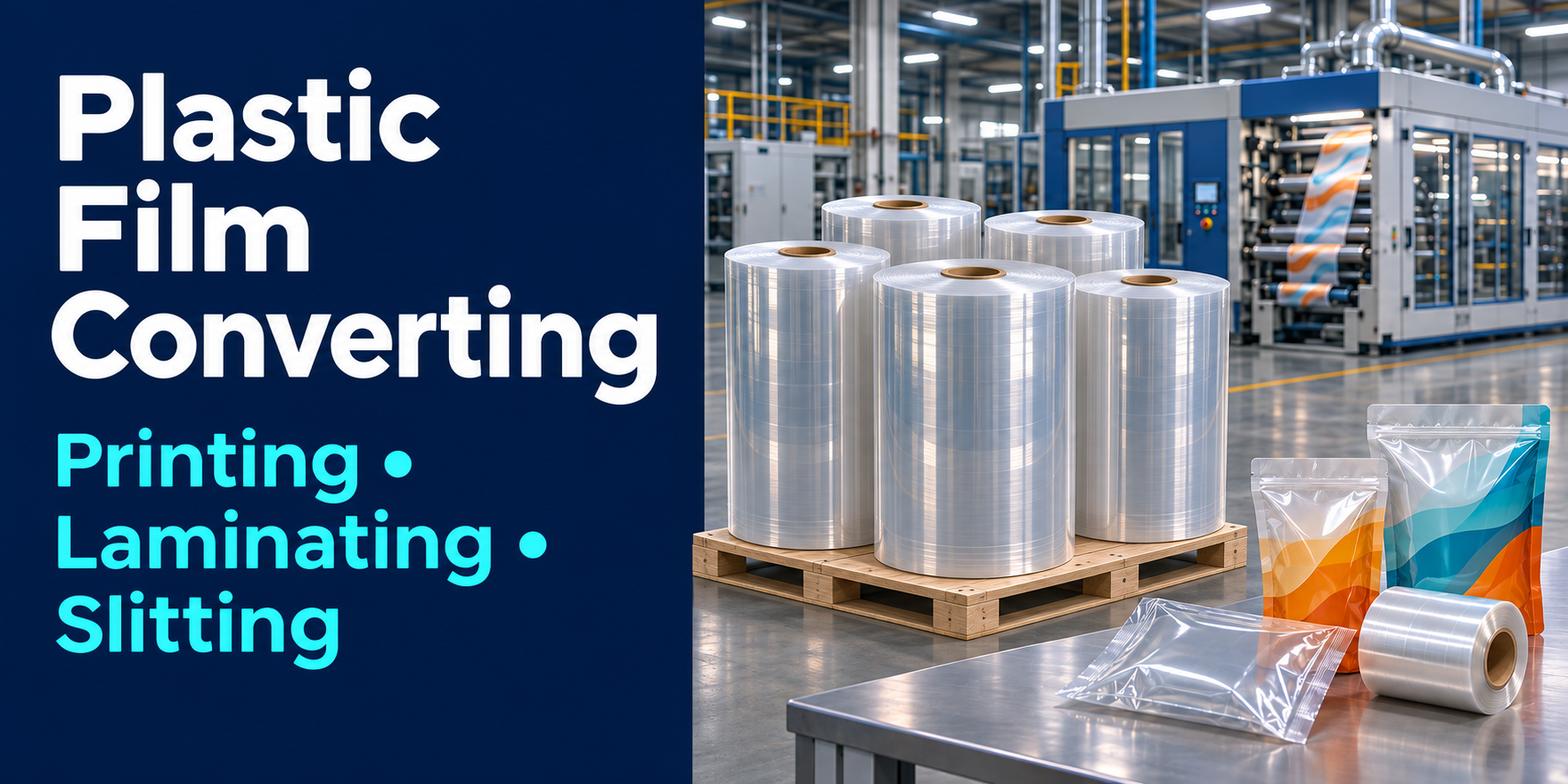
A roll of PE film off the extruder cannot hold potato chips. It has to be printed, laminated to a barrier layer, slit to width, and sealed into a pouch. That work is called converting, and the machines that do it are converting machines.
How a Converting Line Works
Most flexible packaging is converted roll to roll. An unwinder feeds a master roll of PE, PP, PET, or aluminum foil into the machine. The web then passes through one or more stations that apply ink, adhesive, heat, pressure, or blades, and ends at a rewinder or a cutting station.
Two systems keep the web under control along the way. Web guides hold it in line, and closed-loop tension control holds it flat. Too much tension stretches or snaps thin film. Too little causes wrinkles, misregistered print, or telescoped rolls.
The Converting Steps, in Line Order
The steps below follow the order of a typical flexible packaging job. Not every job uses all of them.
1. Surface Treatment
PE and PP have low surface energy, around 30 dyne/cm, and ink and adhesive will not wet them. A corona treater passes the film under a high-voltage discharge that oxidizes the surface and raises it to 38 dyne/cm or higher. The effect fades over time, so converters often treat the film again just before printing or laminating.
2. Printing
Printing comes early, before lamination. The image is usually printed in reverse on the inside of the outer film, so the ink ends up protected between layers.
- Rotogravure uses engraved metal cylinders. The cylinders are expensive, but they hold consistent color over very long runs.
- Central impression (CI) flexography wraps the web around one large drum and prints from flexible relief plates at eight or more color stations. Plates cost less than gravure cylinders, which suits shorter runs.
- Narrow-web flexo and digital presses handle labels and very short runs.
3. Laminating
One film rarely does everything. A typical snack pouch bonds a printed PET outer layer to a barrier layer and a heat-sealable PE inner layer. The barrier can be aluminum foil or a metallized film, which carries a thin layer of aluminum deposited in a vacuum chamber.
Laminators bond the layers by dry-bond (solvent-based or water-based adhesive), solventless adhesive, or extrusion lamination. Adhesive laminates then need curing time, typically a day or two in a warm room, before they can be slit. Plan floor space and lead time for it.
4. Coating and Embossing
Coating stations add a thin functional layer to the moving web: heat-seal lacquer, oxygen barrier, anti-fog for fresh produce, or silicone release for label liners. Embossing runs the film between engraved rollers under heat and pressure to add texture, an anti-slip surface, or a holographic pattern. Both can sit inline with printing or laminating, or run as separate passes.
5. Slitting and Rewinding
Master rolls can be several meters wide. A slitter-rewinder cuts them into the narrower rolls that filling lines and bag machines need, and winds each one to a set tension. The knife depends on the material:
- Razor slitting for thin films such as BOPP, PE, and PET.
- Shear slitting with rotary knives for thicker films, laminates, paper, and foil.
- Score (crush) slitting for tapes and nonwovens, where edge quality matters less.
Many converters inspect the web at this stage and cut out defects before the rolls ship.
6. Bag Making and Die Cutting
Bag and pouch machines fold the web, form gussets, attach zippers or spouts, and heat-seal it into stand-up pouches, side-seal bags, and courier mailers. For labels, rotary or flatbed die cutters kiss-cut the face material and leave the liner intact.
Converting covers film and paper. For decorating molded plastic parts, see our surface decoration guide.
FAQ: What to Ask Before You Buy a Converting Machine
What web width and speed do I need?
Size the machine to your widest regular job, not your widest possible job. For speed, the rated maximum tells you little. Ask what speed the supplier's customers actually run on a film like yours.
Which materials and thicknesses can it run?
Thin films, recycled-content films, and mono-material PE structures stretch and tear more easily than standard laminates, so they need finer tension control. Ask for the minimum and maximum thickness the machine handles, then ask for a trial on your own material. A spec sheet does not tell you whether the supplier has run your film before.
How is tension controlled?
Ask whether tension is closed-loop, measured by load cells or dancer rollers, and whether the rewind uses taper tension. This matters most on thin and stretchy films.
How long does a job change take?
Short runs are now normal, so changeover time can matter more than top speed. Ask how long it takes to change plates, sleeves, or cylinders, whether knife positioning is automatic, and whether the unwind and rewind can change rolls without stopping.
What support comes with the machine?
Ask who installs it, who trains your operators, how fast spare parts ship to your country, and whether the supplier can diagnose faults remotely.
Do I need one machine or a full line?
It depends on what you buy in. A converter that buys printed, laminated rolls needs only a slitter and a bag machine. One that starts from plain film needs every step above, plus curing space.
Finding Converting Machine Suppliers on PRM-Taiwan
PRM platform lists makers of plastics and rubber machinery, from blown-film extruders to slitters, laminators, flexo presses, and bag-making machines.
Each listing has specifications and machine videos, and you can send an inquiry to the manufacturer from the page.
We have over 200 of the biggest and many of the smallest Taiwanese machinery manufacturers on our site and contacts with many more. Whether you are looking for full lines such as, recycling machines extruders, blow molding machines, injection molding machines and printing machines, or auxiliary equipment and parts such as gearboxes, barrels, screws, molds, dies, control systems and virtually anything related to the plastic and rubber industries including packaging. If it’s made in Taiwan, we will find it for you!